
Business and Regulation
What happens at the intersection of business and government? How do businesses influence policy decisions and public institutions? How do policymakers navigate the tensions between private power and democratic values?
Latest Article

Wrangling with Explosive AI Growth
Policymakers are accustomed to thinking in finite measurable terms like laws, budgets, and program implementation. Artificial intelligence, however, no longer advances in a straight line or within the familiar boundaries of public administration.Explore all Articles
filter by–Region
filter by–Country
search by–Keyword

The Rise of a Narrative: Thomas Piketty at the Kennedy School
04.25.14
BY JOSH RUDOLPH The ideas of economists and political philosophers, both when they are right and when they are wrong are more powerful than is commonly understood. Indeed, the world is ruled by little else. – John Maynard Keynes Friday afternoons tend to be subdued affairs at the Harvard Kennedy School. But the afternoon […]
Why We Need Corporate Tax Reform
02.15.14
BY ELLIOTT LONG In 1943, corporate income tax collections accounted for 40 percent of total tax collections. By 2012, they accounted for just 9.7 percent—a 76 percent decrease in less than a century. An examination into the factors contributing to this decline reveals several alarming trends that, if left unchecked, will only lead to further […]

Should Cities Use Hackathons to Solve Social Problems? Lessons from America’s Datafest at Harvard
02.11.14
BY ALISON FLINT I first learned about hackathons when I saw an ad for an event called Datafest hosted at Stanford University three years ago. Like most people, I primarily associated ‘hacking’ with computer programming. However, this Datafest looked different. It turned out that Teresa Bouza, a Knight Fellow at Stanford, had organized the hackathon […]

Ethiopia: Ripe and Open for Business
01.16.14
Individuals readily queue at the door to the visa office at the arrival terminal in the Bole International Airport in Addis Ababa. One individual presses the Ethiopian border guard about the timeliness of the process and the absence of concern for travelers’ time. The guard simply responds: “How do we plan for this [inflow]?” The […]
We all live in Bhopal: Global Protest Against Corporate Impunity
12.18.13
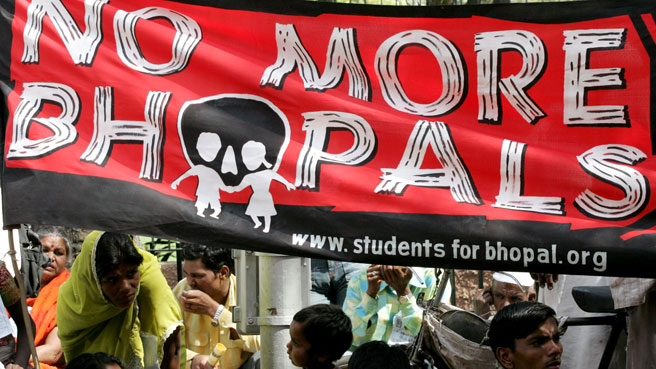
BY SHASHANK SHEKHAR SHUKLA As the city slept, the killer silently crept in. From the windows, doors, ledges and crevices, it came in silently, slaughtering not just hundreds but hundreds of thousands of innocent victims. The killer’s name was methyl isocyanate, and in 4 hours it instantly killed 8,000 people and maimed another 200,000. At […]

Business and Education in the Arab World
12.9.13
This post is part of a series of reviews summarizing presentations and discussions that took place at the 2013 Harvard Arab Weekend. For more information about this event, the largest pan-Arab conference in North America, please visit http://harvardarabweekend.org/ Panel Speakers: On November 11 a panel of three regional experts came together during Harvard Arab […]

Rethinking the Use of Sovereign Wealth Funds in a Knowledge Economy
11.19.13
By Will Hickey The time has come for sovereign wealth funds to produce some meaningful value. Now conservatively valued at around 6 trillion dollars, sovereign wealth funds, or SWFs, are massive state-owned investment vehicles of stocks, bonds, property, precious metals and other financial instruments, including private equity. They are overwhelmingly funded through oil and gas […]

America, Decoupled: The Plight of the Middle Class
10.17.13
Note: This post is part 1 of a 2 part series. Part 2 will be available on Friday, October 18. BY BRIAN CHIGLINSKY It sounded like a fantasy novel. In the heyday of furniture manufacturing, she said, a high school student could drop out, walk out of his schoolhouse, down the road by the river […]
Will the Supreme Court Abolish Common Sense Limits on Campaign Spending?
10.8.13
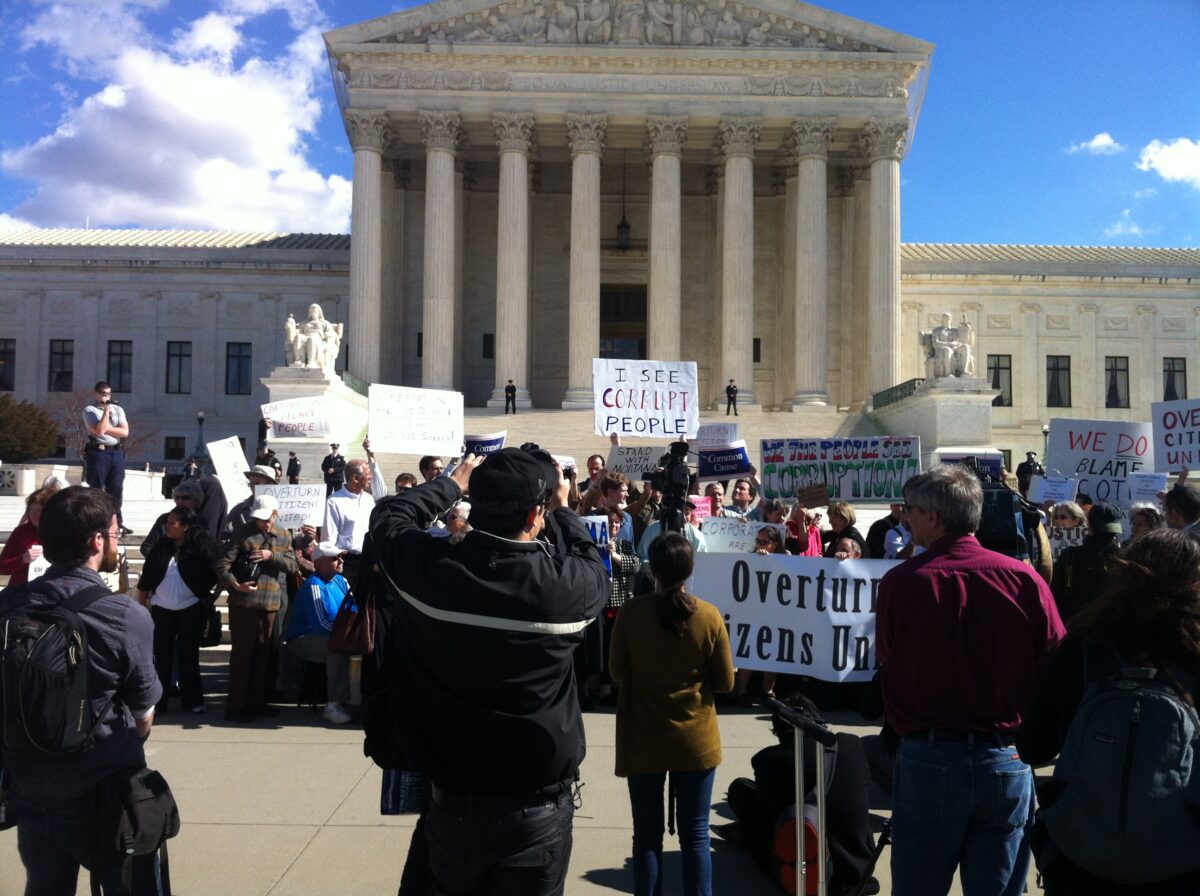
BY PATRICK KIBBE Today, the Supreme Court will hear oral arguments for a case that could be worse for the American public than Citizens United v. FEC, and unleash countless millions of special interest dollars into political campaigns. In this case – McCutcheon and the Republican National Committee v. FEC – Shaun McCutcheon, an Alabama […]
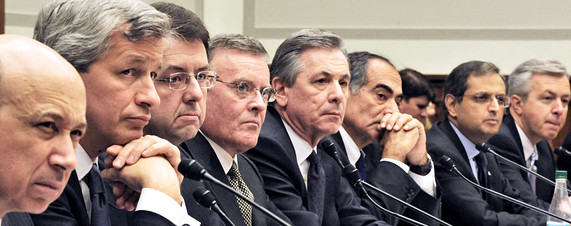
Banks should have to use 50% equity, not 3%-6%
08.26.13
BY JOSH RUDOLPH Over the summer, US bank regulators announced that the eight largest US banks will have to maintain leverage ratios[1] (equity / total assets) of at least 5% for their holding companies and 6% for their depository institutions. This new supplement to the international standard of 3% is a step in the right direction, but […]
Telecommunications Surveillance and Cryptography Regulatory Policy in Africa
05.16.13
Abstract This article examines regulatory policy of cryptography in Africa. Some consider public availability of strong cryptography to be a civil right. Whether used to protect sensitive information or verify identities, individuals and corporations alike benefit from cryptographic software in a world that is becoming increasingly networked. By the same token, users of cryptography might commit […]
Dodd-Frank, Bailout Reform, and Financial Crisis Ambiguities
05.2.13
BY PETER GRUSKIN The financial crisis of 2007-2008 forced U.S. President Barack Obama and his administration to reconcile with the need to “re-regulate” the financial markets. According to the president, the 2010 Dodd-Frank Wall Street Reform and Consumer Protection Act gave the administration much of what it was seeking, but the legislation has also left […]
Decision Making and Negotiation
What skills foster principled and effective decision making?
Development and Economic Growth
How do developing economies create opportunity and growth?

What leads to academic excellence & a stronger labor force?

When should the government intervene in the economy?