
Science, Technology and Data
How are dramatic developments in science and technology changing the public sphere? Can data be harnessed for the goal of good governance? What is the future of privacy?
Latest Article

Another Dimension, New Galaxy: Protecting Orbital Veracity
A single disruption to space services can destabilize power grids, distort stock-market timing, hinder emergency responders when seconds matter, and knock cell-tower networks out of sync.Explore all Articles
filter by–Region
filter by–Country
search by–Keyword
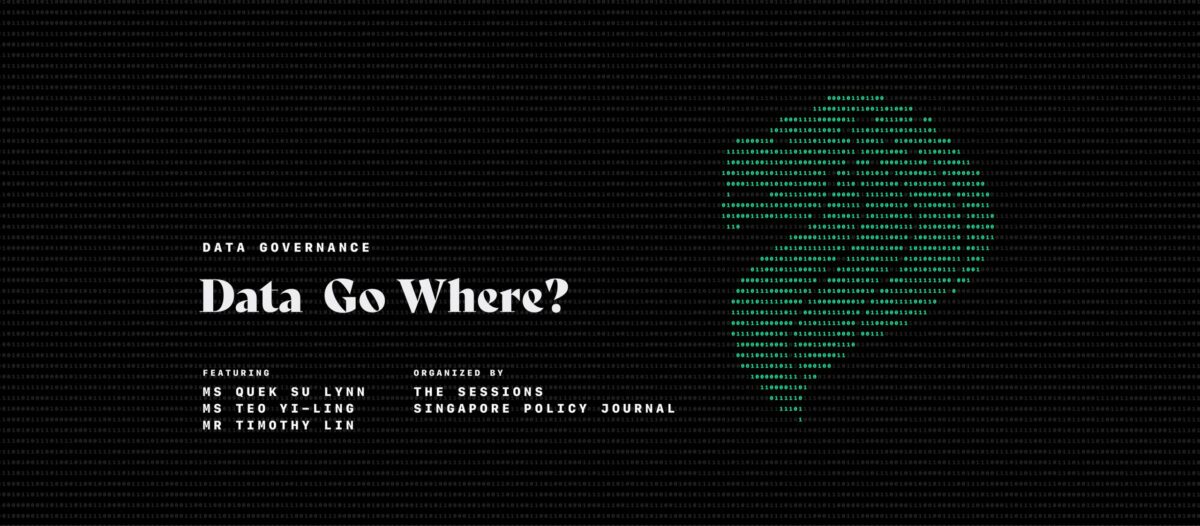
[Discussion Event] Data Go Where? Data Governance in Singapore
04.27.21
On March 25, the Singapore Policy Journal hosted its second virtual event of the Spring 2021 semester in collaboration with The Sessions from the NUS University Scholars Programme, titled “Data Go Where? Data Governance in Singapore.” The event included a short small-group pre-event discussion followed by a speaker panel featuring Quek Su Lynn (Director, Government Data Office), Yi-Ling Teo (Senior Fellow, Centre of Excellence for National Security at RSIS), and Timothy Lin (Co-Founder, Cylynx). In both the discussion and the Q&A with the speakers, a variety of ideas were discussed regarding data governance, and the participants were introduced to private and public sector perspectives of some of the challenges that consumers, companies, and the government face in a field that seems ever-growing.
[Reading Group] Collective Summary #3: Regulating Digital Technology — Challenges & Trade-offs
04.21.21
The following is the third of four collective summaries published by the Singapore Policy Journal’s reading group on Digital Technology. Each collective summary is a product of the topics discussed and the various research directions of the members of the reading group. The reading group comprises various individuals from multiple backgrounds, providing a multidisciplinary approach […]

[Reading Group] Collective Summary #2: The Foundations of Trust in a Digital Society
04.4.21
The following is the second of four collective summaries published by the Singapore Policy Journal’s reading group on Digital Technology. Each collective summary is a product of the topics discussed and the various research directions of the members of the reading group. The reading group comprises various individuals from multiple backgrounds, providing a multidisciplinary approach […]

In TraceTogether We Trust: Singapore’s Challenge with Data Governance and Ethics
04.2.21
Sarah Anderson and Lionel Oh highlight existing gaps in Singapore’s current legislative and bureaucratic structures for managing data and digital technology. They argue that these concerns extend past any single product or incident; because of the importance of building public trust in the government’s use of digital technology, transparency, privacy, and other ethical considerations should be a fixture of technology policy. The authors also provide recommendations on how these data ethics concerns might be addressed through augmented workstreams which introduce procedures and safeguards for government technology.

[Reading Group] Collective Summary #1: Do Citizens Dream of Smart Cities?
03.22.21
As the prevalence of digital technology looks set to become a mainstay in Singapore’s smart nation ambitions, what benefits and costs can we expect? What kind of future will that create, and what are some societal issues that must first be recognized and resolved before accepting such a future?
In the first of four collective summaries following SPJ’s reading group, Jonathan Cheng reviews the topics discussed in the inaugural session. The summary details the takeaways from the group, which comprises student participants from a range of academic backgrounds.

Recommitting to America’s Alliances Means Remaining Committed to American Spacepower
02.11.21
Investment in space is the key to American prosperity, diplomacy and security. The Biden administration should continue support for the Space Force and the private space sector.

Cybersecurity doesn’t win votes, but it saves lives
12.24.20
Times are tough for Americans right now. The immediacy of the chaos and costs introduced by COVID-19, the economic recession, and the election have dominated headlines and political agendas, so it’s understandable that candidates placed cybersecurity on the backburner. That inattention, though, only exacerbated the likelihood that the United States would be subject to an […]

Rethinking Scholarship Diversity: The Pre-U Education of PSC Scholars
09.13.20
Minister-in-Charge of the Public Service Chan Chun Sing recently remarked that the diversity of Public Service Commission Scholarship recipients goes beyond race, language, and religion. This raises questions about how diverse recipients have been in socio-economic terms, of which pre-university education provides a good proxy for assessment. In this piece, Andrew Chia looks at why diversity in background matters, and explores the diversity of PSC scholars using compiled data on PSC Scholarships from 2007 to 2018.

Regulating the Use of Facial Recognition Technology
09.2.20
Advances-in and increasing use-of FRT have brought myriad concerns about the risks of such technology to the forefront of public debate.

A New Approach to Measuring the Digital Divide
08.19.20
As Federal Communications Commissioner Jessica Rosenworcel noted in a recent interview with the Verge, “Numbers are what make Washington move.” Vital statistics, financial information, and other data transmitted over the Internet are central to how the federal government discovers social problems and shapes public policy. As COVID-19 has forced millions of Americans to work, learn, […]

Technology’s impingement on the urban female sanitation worker in India
07.29.20
While three-fourths of the world’s population has access to a basic sanitation service, only about half of the world’s population uses a safely managed sanitation service. Over the last decade, the Government of India has strived to increase access to sanitation, building 100 million additional toilets in rural India over the last five years under […]

People-Driven Smart Policy: A New Public Policy Approach for Pandemics and Beyond
07.25.20
The coronavirus pandemic has dramatically changed the way governments everywhere, and at all levels, deliver services to citizens. There has been a widespread embrace of technology, new and old, even among the most reluctant. Medical services, education and work – for many of us – have moved online, and despite initial hiccups, seem to be […]
How does the media shape public opinion and policy outcomes?

How can governments create sustainable energy policies?

What leads to academic excellence & a stronger labor force?

What should government's role be in providing healthcare?