
Latest Article

Why Marshall, Not Monroe, Best Serves U.S. Interests in Latin America
Power built through partnership, not dominance, is what will secure long-term leadership in the region.Explore all Articles
filter by–Region
filter by–Country
search by–Keyword

The United States Is Not Safe for LGBT Refugees: A Call to Abandon the Canada-United States Safe Third Country Agreement
06.11.21
The Safe Third Country Agreement (STCA) between the United States and Canada has recently appeared in public debate once again.[i] The Agreement was negotiated between the two countries as part of a series of post-September 11, 2001, measures and went into effect in 2004. The logic of this treaty is that each country judges the other […]
[Reading Group] Collective Summary #4: Tying It Up — Truth & Regulation, Privacy & Power, Smart Nation & Cyber Leadership in ASEAN
06.7.21
The following is the last of four collective summaries published by the Singapore Policy Journal’s reading group on Digital Technology. Each collective summary is a product of the topics discussed and the various research directions of the members of the reading group. The reading group comprises various individuals from multiple backgrounds, providing a multidisciplinary approach […]
Silicon Valley Can Meet its Cybersecurity Obligation Through a New Cyber Corps
05.24.21
Silicon Valley has an obligation to secure America’s technology infrastructure. Here is how they can help.

The United States is Complicit in the Ethnic Cleansing of Sheikh Jarrah
05.10.21
Decades of impunity for Israel have progressives at a crossroad. What are progressive elected officials willing to do to counter settler colonialism? Anything less than using the full arsenal available to them is complicity.

Sprints for America: Pairing Private Sector Tech with Public Sector Projects
05.5.21
Government has long struggled to import tech talent. Sprints for America could be a new answer to this challenge.
[Discussion Event] Data Go Where? Data Governance in Singapore
04.27.21
On March 25, the Singapore Policy Journal hosted its second virtual event of the Spring 2021 semester in collaboration with The Sessions from the NUS University Scholars Programme, titled “Data Go Where? Data Governance in Singapore.” The event included a short small-group pre-event discussion followed by a speaker panel featuring Quek Su Lynn (Director, Government Data Office), Yi-Ling Teo (Senior Fellow, Centre of Excellence for National Security at RSIS), and Timothy Lin (Co-Founder, Cylynx). In both the discussion and the Q&A with the speakers, a variety of ideas were discussed regarding data governance, and the participants were introduced to private and public sector perspectives of some of the challenges that consumers, companies, and the government face in a field that seems ever-growing.

“The pain of refugees is a part of me . . .”
04.25.21
Interview with Jay (Jihad) Abdo. Photo credits to Fadia Afashe. On 24 October 2020 Syrian-American Hollywood actor Jay (Jihad) Abdo cast his vote for the first time ever in a presidential election. He and his wife Fadia Afashe, a lawyer and visual artist, were never allowed to participate in free elections before or even have […]
[Reading Group] Collective Summary #3: Regulating Digital Technology — Challenges & Trade-offs
04.21.21
The following is the third of four collective summaries published by the Singapore Policy Journal’s reading group on Digital Technology. Each collective summary is a product of the topics discussed and the various research directions of the members of the reading group. The reading group comprises various individuals from multiple backgrounds, providing a multidisciplinary approach […]

A Progressive Domestic Agenda Needs A Foreign Policy Vision to Match
04.15.21
A progressive vision for the United States needs to include foreign policy. Today’s challenges require a holistic view that recognizes the connections between domestic and international issues. Military-first approaches have long predominated in American engagement with the world, but advancing justice for all amid historic crises will require a new paradigm.

[Reading Group] Collective Summary #2: The Foundations of Trust in a Digital Society
04.4.21
The following is the second of four collective summaries published by the Singapore Policy Journal’s reading group on Digital Technology. Each collective summary is a product of the topics discussed and the various research directions of the members of the reading group. The reading group comprises various individuals from multiple backgrounds, providing a multidisciplinary approach […]

In TraceTogether We Trust: Singapore’s Challenge with Data Governance and Ethics
04.2.21
Sarah Anderson and Lionel Oh highlight existing gaps in Singapore’s current legislative and bureaucratic structures for managing data and digital technology. They argue that these concerns extend past any single product or incident; because of the importance of building public trust in the government’s use of digital technology, transparency, privacy, and other ethical considerations should be a fixture of technology policy. The authors also provide recommendations on how these data ethics concerns might be addressed through augmented workstreams which introduce procedures and safeguards for government technology.
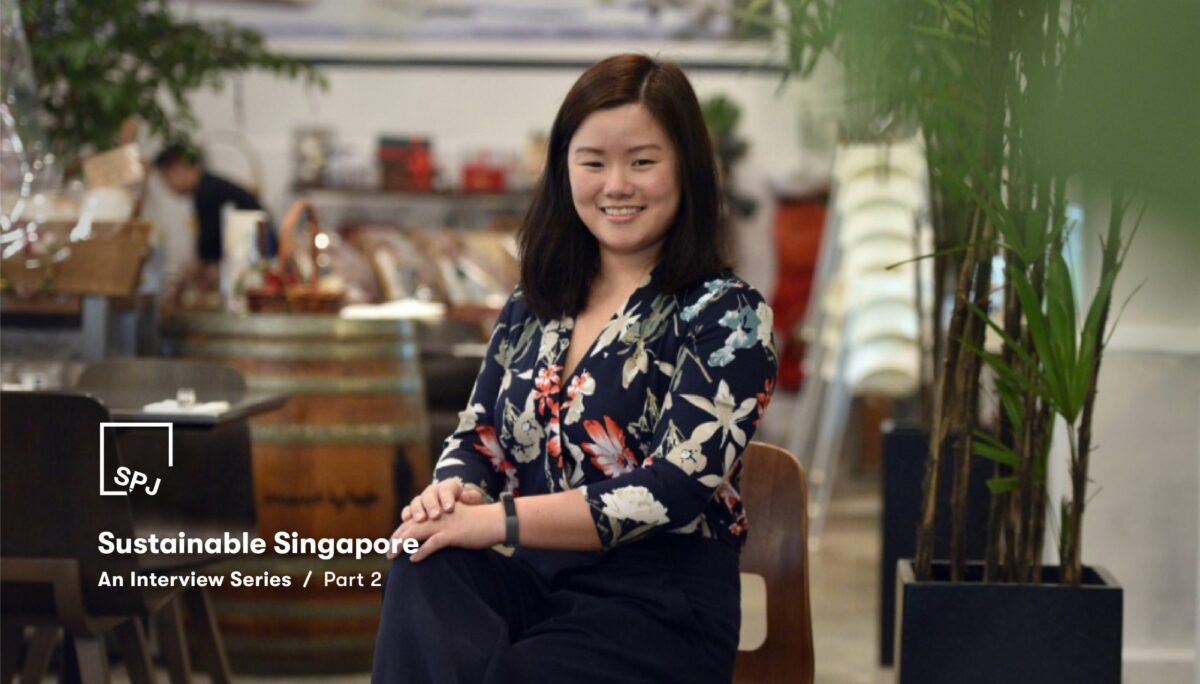
[Sustainability Series] An Interview with Melissa Low: Part Two
03.28.21
In the second part of SPJ’s interview series on sustainability, we continue our conversation with Melissa Low, a research fellow at the Energy Studies Institute at the National University of Singapore (NUS), this time focusing on the broader global context and Singapore’s role in it. In light of recent global milestones in climate policy, Melissa shares with us about how they influenced her work in Singapore, as well as her well wishes for Singapore’s climate policy.