

Education, Training and Labor
How are technological innovation, globalization, and other factors changing how we educate and train people? Can closing opportunity gaps lead to academic excellence and a stronger labor force?
Latest Article

Older workers are left behind by today’s job market. They need a safety net.
If nothing is done to address layoffs amongst older workers, the US could be facing a future of increased poverty among adults as they are about to enter retirement age.Explore all Articles
filter by–Region
filter by–Country
search by–Keyword

Reimagining Policing In America
01.20.22
Reimagining Community Policing In America
Harvard Kennedy School 2021 Diversity Report
12.29.21
Harvard Kennedy School 2021 Diversity Report

Shifting Policies, Unshifting Issues: Educational Equity in Singapore’s Primary 1 Registration Exercise
11.24.21
Ruru Hoong argues that the Ministry of Education’s recent change in the 2022 Primary 1 Registration exercise does not address underlying issues of educational equity. Rather, two potential policy interventions should be implemented—critically assessing the priority schemes and re-evaluating the overall school assignment structure for greater procedural equity. Rethinking these policies could have immense implications for the country’s goal to ensure that schools remain accessible to children of all backgrounds.

Preschools for the People: An Examination of Singapore’s Early Childhood Education Landscape (Part 2)
11.13.21
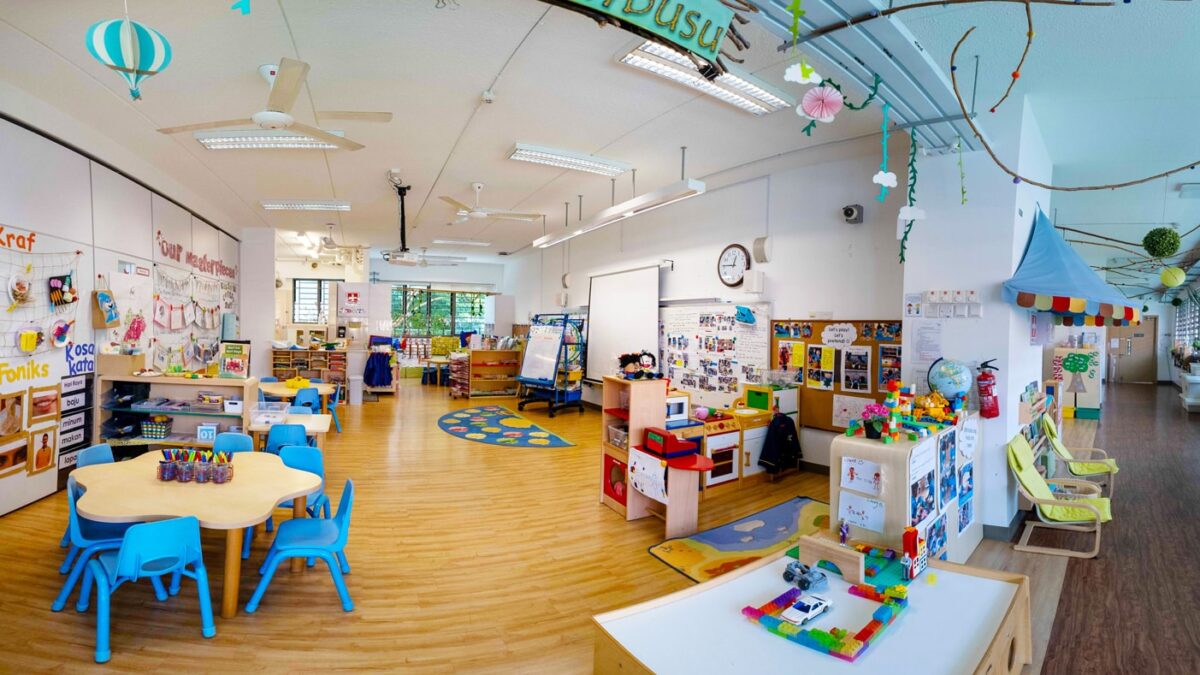
In this two-part series, students from Roosevelt Network@Yale-NUS College delve into Singapore’s early childhood care and education (ECCE) landscape, examining the current state of quality and access in the sector. In part one, the authors discussed Singapore’s progress towards improving quality in the ECCE sector. Here in part two, they now turn towards the accessibility of ECCE services, and subsequently synthesise the issues of quality and access to deliver insights regarding the industry as a whole.
Preschools for the People: An Examination of Singapore’s Early Childhood Education Landscape (Part 1)
11.8.21
In this two-part series, students from Roosevelt Network@Yale-NUS College delve into Singapore’s early childhood care and education (ECCE) landscape. They draw upon expert interviews and careful study of existing government policies to unpack issues surrounding quality and access in the sector. In this first article, the authors argue that while the government has made significant strides in uplifting and standardizing ECCE provision in recent years, there remains room to tighten minimum quality standards. Effort also needs to be made to correct the societal undervaluation of ECCE jobs, providing professionals in the sector with remuneration and recognition that reflects the vital role they play in child development.

Exploring the Need for and Benefits of LGBTQA Faculty and Staff Groups in Higher Education
06.11.21
Introduction Although many colleges and universities have LGBTQA faculty and staff affinity groups or employee resource groups, these groups lack a consistent definition or strategic structure to best serve their members. In this paper, the history of these groups will be detailed, and recommendations will be given based on a review of the current literature […]

HKS Must Become Anti-Racist: Bystander Politics Reflect Complicity in Racial Injustice
02.23.21
While administrators and faculty make grand statements about anti-racist beliefs, the school itself continues to uphold institutional racism by refusing to solve the problems the Equity Coalition and identity-based student groups have been challenging for years.

Ace in the Hole: Private Sector Innovations for Naval Reserve Talent Management
02.16.21
The United States Naval Reserve has always been a pool of talent supporting the active force; now, in an era of Great Power Competition, it must innovate its manning policies if it wants to stay that way.

Separate But Equal
11.21.20
Realizing the aspirations of Brown requires addressing the panoply of issues perpetuating racial and class divides. We can’t solve segregation at the school district level. Society has to get involved.
Letter to the Editor: Response to Rethinking Scholarship Diversity
09.21.20
Aloysius Foo responds to our previous article by Andrew Chia, Rethinking Scholarship Diversity: The Pre-U Education of PSC Scholars. In his letter, he highlights the need to go beyond diversity, and explore the deeper issues surrounding Singapore’s social class reproduction, which has created an “Aristocracy of Merit”.

Including School Custodians in the Coronavirus K-12 School Reopening Debate
09.19.20
As the new academic year begins for the approximately 130,930 K-12 schools across the U.S. and the debate about reopening schools continues to grow at the local and national level, some key voices are missing from the conversation. While school districts decide to remain online, adopt hybrid options, or embrace full in-person classes, the main […]

Rethinking Scholarship Diversity: The Pre-U Education of PSC Scholars
09.13.20
Minister-in-Charge of the Public Service Chan Chun Sing recently remarked that the diversity of Public Service Commission Scholarship recipients goes beyond race, language, and religion. This raises questions about how diverse recipients have been in socio-economic terms, of which pre-university education provides a good proxy for assessment. In this piece, Andrew Chia looks at why diversity in background matters, and explores the diversity of PSC scholars using compiled data on PSC Scholarships from 2007 to 2018.
Development and Economic Growth
How do developing economies create opportunity and growth?
How do gender, race, and class influence policy outcomes?

How is technology changing the public sphere?
How do we create strong, healthy, and just societies?