
Latest Article

The Transatlantic Alliance Isn’t Dead. Treating It That Way Could Make It So.
The transatlantic alliance is increasingly described today in terms of decline, rupture, and even collapse.[1] Political leaders and commentators on both sides of the Atlantic have openly questioned whether the relationship can endure in its current form. From warnings that it is “broken” to claims that it is effectively “over,” the narrative of a fading […]Explore all Articles
filter by–Region
filter by–Country
search by–Keyword

Why the Recent Proposals to Solve the Climate Crisis Fall Short
09.24.20
The accumulation of greenhouse gases (GHGs) has now made emission control obsolete as the framing idea for a climate change remedy, as the climate crisis is no longer primarily an emission problem — it is now a concentration problem.

Rethinking Scholarship Diversity: The Pre-U Education of PSC Scholars
09.13.20
Minister-in-Charge of the Public Service Chan Chun Sing recently remarked that the diversity of Public Service Commission Scholarship recipients goes beyond race, language, and religion. This raises questions about how diverse recipients have been in socio-economic terms, of which pre-university education provides a good proxy for assessment. In this piece, Andrew Chia looks at why diversity in background matters, and explores the diversity of PSC scholars using compiled data on PSC Scholarships from 2007 to 2018.

Beyond Plastic Recycling: A look at Extended Producer Responsibility in Singapore
09.7.20
Singapore’s current efforts in managing plastic waste are mostly focused on downstream measures, but the broader issue of plastic consumption continues to require action upstream. Ensuring responsible production processes, through policy regulation, can help to promote general reduction of plastic waste and environmental impact. To that end, Woo Qiyun spotlights the role of an Extended Producer Responsibility scheme in Singapore, to increase the accountability of corporations and government.

Regulating the Use of Facial Recognition Technology
09.2.20
Advances-in and increasing use-of FRT have brought myriad concerns about the risks of such technology to the forefront of public debate.

A New Approach to Measuring the Digital Divide
08.19.20
As Federal Communications Commissioner Jessica Rosenworcel noted in a recent interview with the Verge, “Numbers are what make Washington move.” Vital statistics, financial information, and other data transmitted over the Internet are central to how the federal government discovers social problems and shapes public policy. As COVID-19 has forced millions of Americans to work, learn, […]

Technology’s impingement on the urban female sanitation worker in India
07.29.20
While three-fourths of the world’s population has access to a basic sanitation service, only about half of the world’s population uses a safely managed sanitation service. Over the last decade, the Government of India has strived to increase access to sanitation, building 100 million additional toilets in rural India over the last five years under […]

People-Driven Smart Policy: A New Public Policy Approach for Pandemics and Beyond
07.25.20
The coronavirus pandemic has dramatically changed the way governments everywhere, and at all levels, deliver services to citizens. There has been a widespread embrace of technology, new and old, even among the most reluctant. Medical services, education and work – for many of us – have moved online, and despite initial hiccups, seem to be […]

Turkey’s Hagia Sophia Decision as Foreign Policy Signal
07.14.20
On July 10, 2020, Turkish President Recep Tayyip Erdogan signed an order which would allow the disintegration of Hagia Sophia’s museum status and turn it back into a mosque. Pro-government Turkish news outlet Yeni Şafak headlined the same day: “The West Goes Mad.” (Batı çıldırıyor) [1] With the signature of the Council of State’s memorandum […]
The politics of language: How can we mainstream social justice vocabularies?
06.22.20
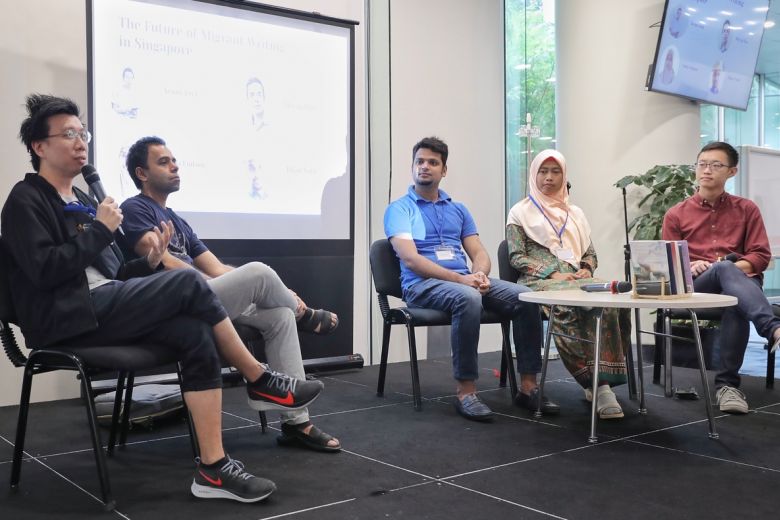
How might we mainstream social justice ideas and language, beginning a national conversation that extends beyond more recognised civil society actors? Reflecting on the discourse surrounding migrant rights, Quah Say Jye draws upon philosopher Miranda Fricker’s concept of “epistemic injustice” to propose a shared vocabulary that might allow migrant workers into our linguistic community. He suggests that our semantic choices need to accurately represent the lived experiences of migrant workers, be accessible to them and the general public, and have the potential to pivot towards broader structural critiques.

A Digitalization Compass for States
06.15.20
Over the past few years, scientists and experts have repeatedly warned the world community about the possibility of a new viral pandemic as a major threat to humanity. As usual, their voices were ignored. “Who was there to hear them anyway?” you might ask, when in the light of ubiquitously growing populism and nationalism, as […]

COVID-19 Could Force China to Accelerate the Reform of Its State-Owned Enterprises
06.12.20
The current COVID-19 pandemic has placed a stranglehold on the world economy, and China has been no exception. Significantly, these effects have rippled across many countries that have benefitted from China’s lending spree over the past two decades, and whose economies have now taken a plunge. Many, if not all, are now in desperate need […]
The Wheat Fields Still Whisper: Forgotten Human Rights Stories from Punjab, 1984-2020
06.4.20
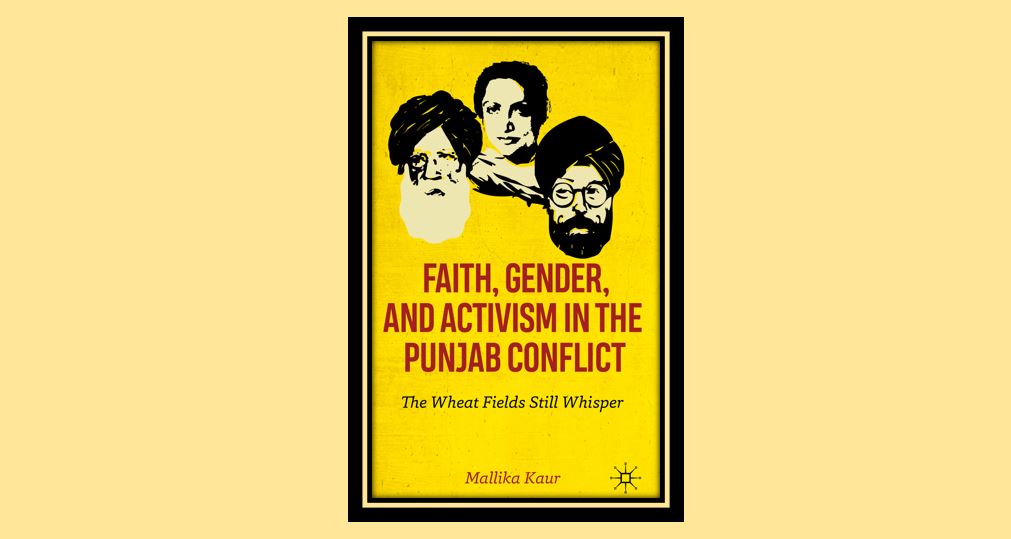
As I was completing my MPP, a faculty member at Harvard Kennedy School had written to the chair of a prominent North American foundation, confident they would be interested in my work. The chair, a man of South Asian descent whom I shall call Mr. X, sent back a pat response: The proposal focusing on […]