
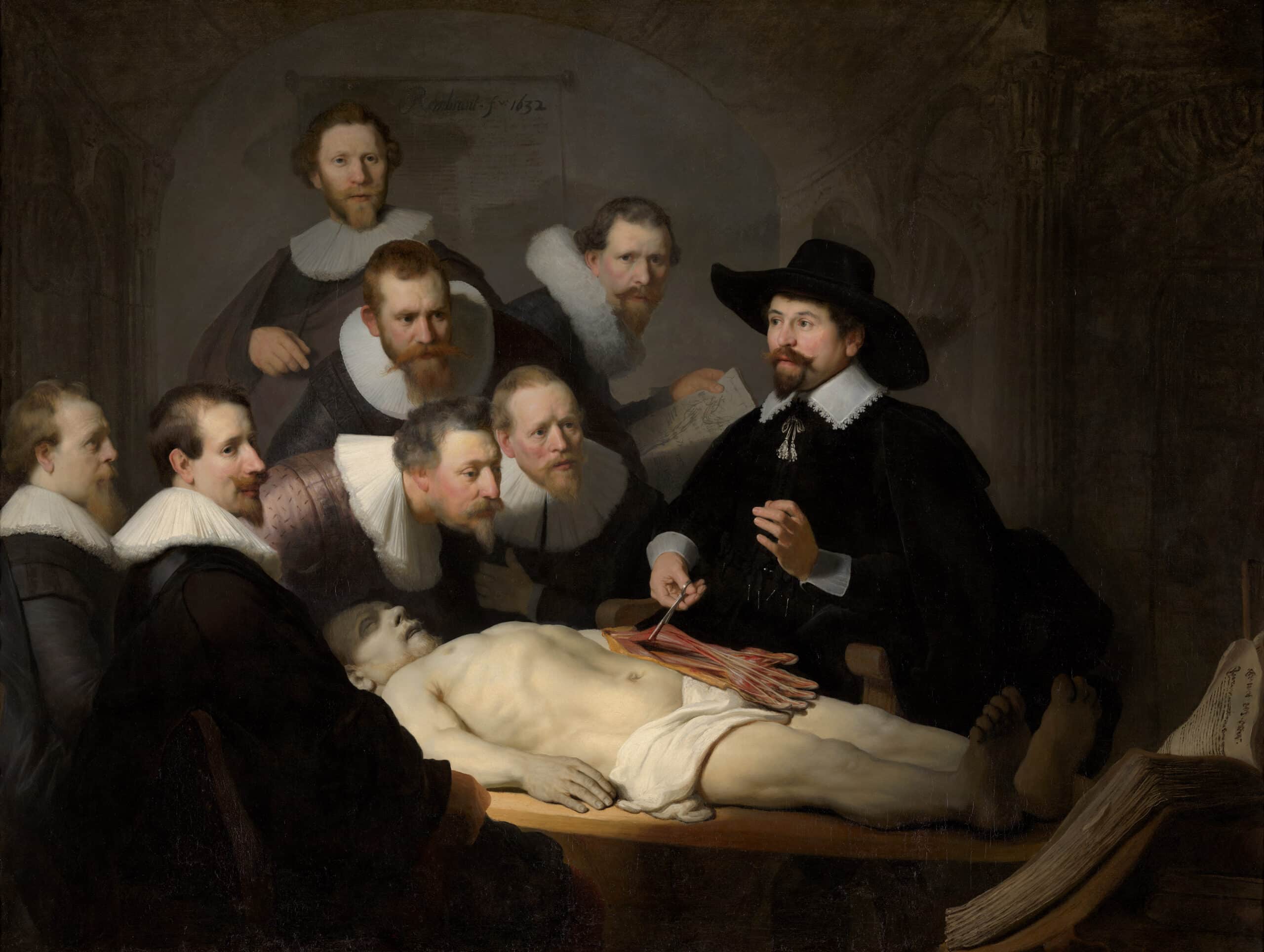
For years we’ve comforted ourselves with the idea that medicine is part art, part science. But what if most of what we call “the art of medicine” is simply the shadow cast by the limits of science, and the rest where our knowledge is still incomplete?
I admit that what we call the “art of medicine” is confusing. We use the same phrase to describe two very different things. One is art: intuition and hard-earned clinical skills practiced under uncertainty. The other is humanity: the moral and relational work of caring for people.
In practice, we often blur these together. When we don’t fully understand what is happening, we lean on warmth, presence, and good intentions, and call the whole bundle “art.” Humanity becomes a kind of cover for the fact that we’re still guessing.
I argue that better science lets us finally pull those two pieces apart. As evidence and tools improve, more of what we currently file under “art” becomes measurable and repeatable. The uncertainty shrinks. What’s left, what cannot be automated or reduced to protocol, is the humanity of medicine: being present, bearing witness, caring for, and leading patients through difficult times.
In that world, the “art” of medicine is no longer a euphemism for ignorance. It’s reserved for what matters most: the human connection that remains after we’ve done everything science can do.
You can see this distinction in how our diagnostic tools have changed over time. When tests were slow and vague, doctors had to guess more. As our tools have gotten better, doctors can point more precisely to what is actually wrong. Bloodwork that once took days now takes minutes. Imaging that once showed fuzzy shapes and shadows now reveals fine details. Genetic tests can pinpoint risks and explain conditions that were previously mysteries. The better our tools become, the less room there is for guesswork. What was once intuition or “art” becomes straightforward science.
Science has also transformed how clinicians explain illness to patients. New technologies allow us to see what is happening inside our bodies in real time. A doctor can pull up a scan, show a blocked artery or a tumor, and visually walk through treatment options. When patients can see and understand the problem and their options, “the mysteries disappear and life stands explained,” to borrow from Mark Twain. Parts of medicine that once succumbed to hemming and hawing based on intuition now rest on images and data visualizations. This is science steadily replacing uncertainty – what we used to call art.
As we move into precision medicine, the shift becomes even more striking. We are no longer just treating broad groups of patients. We are designing therapies, like gene and cell therapies, tailored to individuals. These approaches reduce trials and errors and improve accuracy. They are not perfect, but once again, better science shrinks the space where “art” used to live.
Of course, not everything can be solved by science alone. The humanity of medicine, the pain, fear, grief, anxiety, and emotional weight of illness, especially near the end-of-life, remains deeply human. Yet even here, technology has surprised us. When new AI chatbots were released, millions turned to them for emotional support because they were available, nonjudgmental, and easy to talk to. The bots aren’t perfect; there have been tragic cases linked to misuse, including lawsuits alleging that unsafe chatbot behavior contributed to teen suicides. Yet even amid these failures, randomized trials of tools like Dartmouth’s Therabot show that a well-designed AI therapist can significantly reduce symptoms of depression and anxiety and build rapport that patients rate on par with human clinicians.
This isn’t to diminish human connection. Therapists remain irreplaceable for complex cases. The point is that even some aspects of “emotional care” we assumed were pure art turn out to have structure: patterns we can study, measure, and improve – so that scarce human empathy is used where it matters most.
Nowhere is this clearer than in obesity, one of the best examples of how a truly complex problem can become simpler when the right science arrives. Only a few years ago, leading thinkers at the best research institutions described obesity as a deeply tangled problem involving biology, psychology, behavior, social environment, and economics, which remains true. One would have been labeled a lunatic to suggest a magic pill. Obesity required massive lifestyle changes, community investment and redesign, and long-term behavioral support.
Then GLP-1 drugs arrived.
For the first time in recent history, the U.S. national obesity curve has begun to bend downward. Millions of people are losing meaningful amounts of weight at levels we have simply never seen before, not because their biology or food environments suddenly changed but because science finally delivered a powerful tool. What once required years of counseling, diet changes, and structural interventions can now, for many, be moved with weekly or monthly injections. Cost and access problems have not vanished; these drugs remain expensive and unevenly distributed. But that has been true of nearly every major medical breakthrough at first. Over time, prices fall, competitors and generics arrive, and access broadens, as we saw with hypertension medications, HIV therapies, and many cancer drugs.
The lesson is not that complexity disappears, but that good science can collapse a wide range of “art” workarounds into a precise, reliable intervention. The “art of medicine” currently occupies too much space in care not because clinicians lack skill, but because science has not yet shrunk our ignorance enough.
Better science lets us compress that gray zone, replacing guesswork with precision diagnostics, imaging, real time biomarkers, predictive algorithms, and tailored medications. That, in turn, frees clinicians to focus on what truly cannot be replicated by machines or protocols: walking families through grief, laying hands on a patient, sitting at the bedside, and gazing into frightened eyes with the quiet assurance that someone who genuinely cares is present. In other words, as science advances, what we should want is less “art” as a euphemism for uncertainty, and more art as pure humanity.
This raises a few big questions: what, and where, are the next “GLP-1 moments” hiding in other diseases? For Alzheimer’s? For major depression? For autoimmune disorders? And how do we push science forward fast enough, and fairly enough, that people who cannot easily change their social and economic circumstances can still benefit?
To me, this is the moral responsibility of modern science: to move quickly, boldly, accurately, and inclusively.
But faster, better, more inclusive science is not inevitable. It happens only when we make deliberate policy choices. Current and future policymakers must recenter research and development as a national priority, backed by coordinated public-private strategies to ensure that breakthroughs become accessible to most, if not all.
On January 23, 2026, Congress stepped up again. In a rare bipartisan move, lawmakers passed H.R. 6938, an appropriations bill that turned what could have been a major setback for science into a cautious win. Under a tenuous fiscal outlook, funding for the EPA and NSF was largely restored, and the National Institute of Standards and Technology – critical for cybersecurity, AI and advanced manufacturing – received a 21% funding boost instead of the 43% cut that had been on the table. This outcome shows what is possible when political leaders prioritize evidence over ideology; progress over politics; science over art. The NIH notwithstanding, this bill largely preserves the research pipeline and sends a clear signal: science cannot, and must not, be negotiable.
If we define “art” properly, as the human work of showing up, listening, comforting, kindness, showing empathy, and guiding families through unquantifiable moments, then that is exactly what science should make more room for. The more precise our diagnostics, the clearer our communication tools, the more targeted our therapies, and the more accessible our treatments, the less room there is for bias, luck, and guesswork.
Yes, discrimination and bias persist even when science provides clear answers. But people may face even more discrimination when science remains vague, because uncertainty and ignorance create fertile ground for unfair treatment, stereotypes, and unchecked assumptions to flourish.
Science may not solve every human problem. But it shrinks the space where bias and uncertainty can hide. And that alone is reason enough to keep pushing for more science, and to reserve the art of medicine for what truly matters: our shared humanity.