
Latest Article

Why Marshall, Not Monroe, Best Serves U.S. Interests in Latin America
Power built through partnership, not dominance, is what will secure long-term leadership in the region.Explore all Articles
filter by–Region
filter by–Country
search by–Keyword

Civil Society: A Key Player in the Global Fight Against Misinformation
02.7.20
Editor’s Note: Information for this article was obtained primarily from interviews by the authors. Names and identifying information have been withheld in some cases to protect the identity of the interviewees. In the aftermath of the 2016 US presidential election, reports of Russian interference and accusations of biased news coverage gave rise to a renewed […]

The Invisible Work of Girls: Inside the Life of Female Child Labor in Ghana
01.21.20
*The names of the subjects in this article have been changed to protect their identity. A heavy stench of sewage permeates the air where 11-year-old Amina roams in search of change. With tattered sandals and stained clothing nearly sliding off her frail frame, she entertains herself by kicking dust on a busy, trash-filled street […]

Using Blockchain for Immutable Mediation and Autonomous Governance
01.15.20
Introduction Blockchain is the decentralized system that underpins cryptocurrencies. It offers a secure and impartial platform that can store vast amounts of transactional data for any asset that can be digitized. It cannot be manipulated or hacked due to its complex security features and the legacy of transactions that promote continuity, much like real objects […]

Government as a Platform: How Policy Makers Should Think about the Foundations of Digital Public Infrastructure
01.14.20
For all the promise of digital government, it has done very little in the Western world to fundamentally alter the structure or processes of the state. Through much of its history, the primary goal of modernization and digitization has been to automate repetitive work or back-office tasks. The paper form became an electronic survey; the […]

The Management of Threats in Singapore: Civil-Military Integration
01.3.20
In this paper, Isaac Neo explores why Singapore’s historical experience with high levels of internal and external threat have not resulted in degraded civilian control over the military, despite existing Civil-Military Relations models predicting such an outcome. He argues this is due to the effective demarcation of responsibility between civilian institutions and the Singapore Armed Forces, along the lines of internal and external threat management. This is reinforced by the subordination of the military to a broader notion of security through the Total Defence framework. Lastly, there is a sustained effort to civilianise the military sphere, through National Service and other administrative structures.

State Influence and Technical Standards
12.31.19
“If you control an industry’s standards, you control that industry lock, stock and ledger.”[1] What Are Standards? Before the now-ubiquitous USB drive existed, computers used serial and parallel ports to transfer data from devices like keyboards, mice, and printers. To address this inefficiency, the USB was invented in 1994 by Ajay Bhatt of Intel and […]

Interview of Dr. Albert Zeufack, World Bank’s Chief Economist for Africa
12.31.19
Dr. Albert Zeufack sat with our lead interview editor, Mez Belo-Osagie. Dr. Zeufack answered questions on a wide variety of topics including his career path in academia and policy-making, digitization, Africa’s infrastructure gap, and Chinese engagement with the African continent.
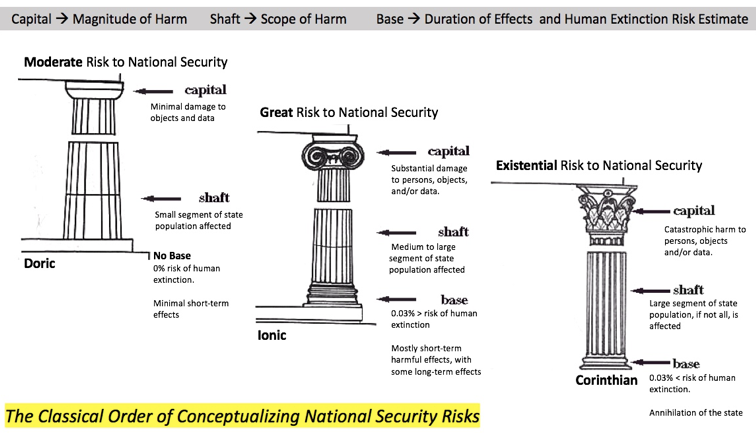
Borrowing a Column from Thomas Jefferson: The Architecture of National Security Risks
12.27.19
In exploring what constitutes an existential risk – something that threatens the extinction of intelligent life – we evaluate the significance of an electromagnetic pulse (EMP) threat both naturally occurring and manmade.

In .gov We Trust: The Troubled but Crucial Relationship between Technology and Government
12.26.19
When it comes to politics, April 2020 may be just as important as November 2020. Why? 1 April 2020 is enumeration day for the 2020 Census, a monumental task the federal government undertakes every ten years to count each and every resident—but this time, part of that count will occur for the first time over […]
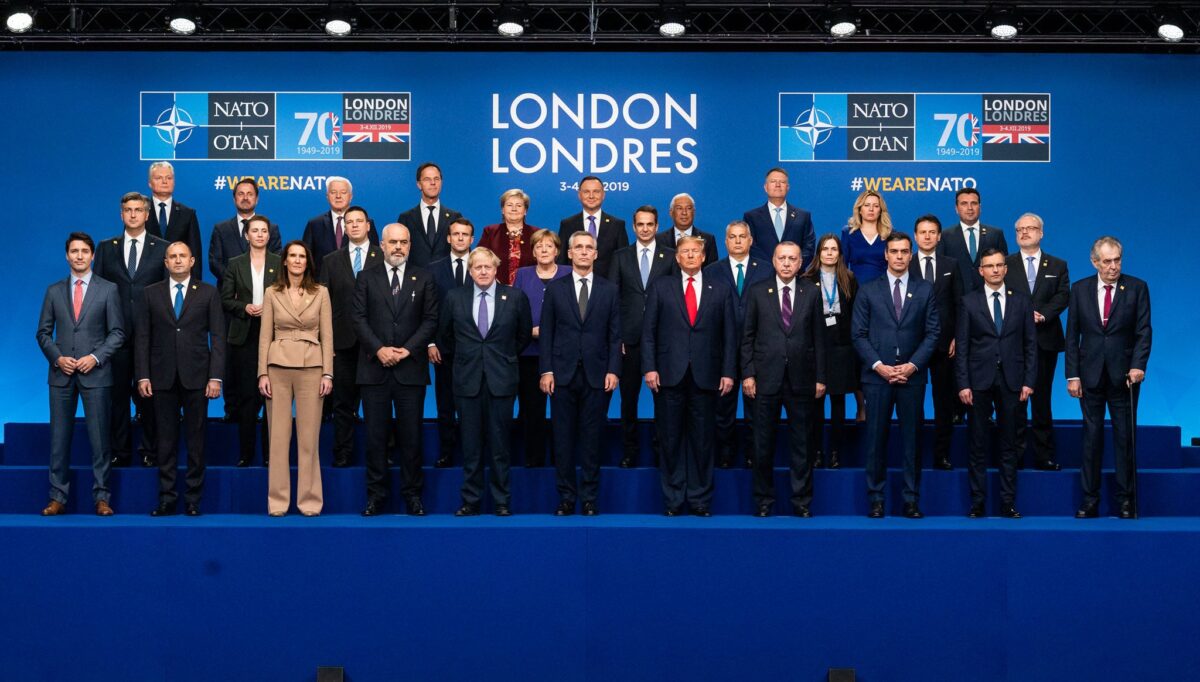
There is More to the Transatlantic Freeze than Donald Trump
12.19.19
Even at Harvard, a liberal Atlanticist bubble where the Marshall Plan was first announced, events to celebrate NATO’s 70th Anniversary celebration were sparsely attended by American students, unlike Europeans who were excited to attend. Expectations for the NATO summit scheduled this month in London were low, and organizers hoped at best to avoid new tensions […]
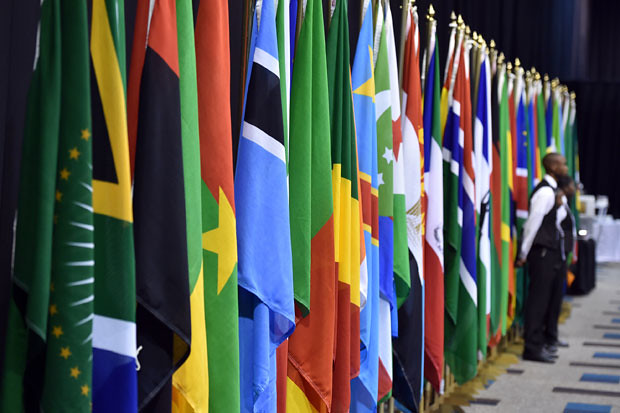
The Disjointed State of US–Africa Affairs
12.10.19
Africa in the 21st century is young, urban, and digitally connected. More than half of all Africans are younger than 20. By mid-century, more Africans will migrate to cities than on any other continent in the world, seeking opportunity across both physical and digital spaces. Sub-Saharan Africa has experienced the highest growth in internet usage […]
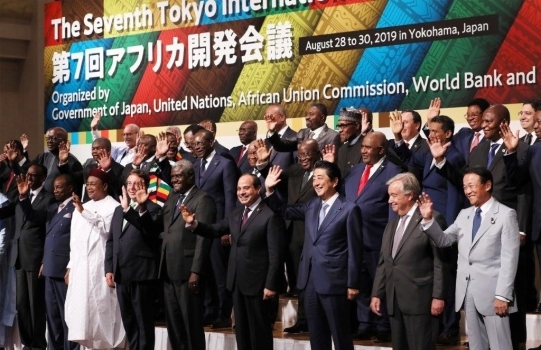
Africa-East Asia Relations: Any Opportunities for Japan-China Cooperation?
12.3.19
East Asia’s footprints in Africa over the past few decades have significantly evolved from mere diplomatic presence to encompass steadfast multilateral engagements. The growing engagements have been enabled by the two major East Asian countries – Japan and China. Both countries have supported Africa with investments and development aid. Japan, for example, through the Tokyo […]