
Latest Article

The Transatlantic Alliance Isn’t Dead. Treating It That Way Could Make It So.
The transatlantic alliance is increasingly described today in terms of decline, rupture, and even collapse.[1] Political leaders and commentators on both sides of the Atlantic have openly questioned whether the relationship can endure in its current form. From warnings that it is “broken” to claims that it is effectively “over,” the narrative of a fading […]Explore all Articles
filter by–Region
filter by–Country
search by–Keyword

In TraceTogether We Trust: Singapore’s Challenge with Data Governance and Ethics
04.2.21
Sarah Anderson and Lionel Oh highlight existing gaps in Singapore’s current legislative and bureaucratic structures for managing data and digital technology. They argue that these concerns extend past any single product or incident; because of the importance of building public trust in the government’s use of digital technology, transparency, privacy, and other ethical considerations should be a fixture of technology policy. The authors also provide recommendations on how these data ethics concerns might be addressed through augmented workstreams which introduce procedures and safeguards for government technology.

[Sustainability Series] An Interview with Melissa Low: Part Two
03.28.21
In the second part of SPJ’s interview series on sustainability, we continue our conversation with Melissa Low, a research fellow at the Energy Studies Institute at the National University of Singapore (NUS), this time focusing on the broader global context and Singapore’s role in it. In light of recent global milestones in climate policy, Melissa shares with us about how they influenced her work in Singapore, as well as her well wishes for Singapore’s climate policy.

[Reading Group] Collective Summary #1: Do Citizens Dream of Smart Cities?
03.22.21
As the prevalence of digital technology looks set to become a mainstay in Singapore’s smart nation ambitions, what benefits and costs can we expect? What kind of future will that create, and what are some societal issues that must first be recognized and resolved before accepting such a future?
In the first of four collective summaries following SPJ’s reading group, Jonathan Cheng reviews the topics discussed in the inaugural session. The summary details the takeaways from the group, which comprises student participants from a range of academic backgrounds.
[Discussion Event] From Brown to Green: Environmental Policy and the Economy
03.19.21
On March 13th, SPJ hosted its first virtual discussion of the Spring semester. It was motivated by the announcement of Singapore’s Green Plan 2030, a cross-ministry initiative promoting ‘sustainable development’ in the city-state. In light of this, the discussion centered around the tensions and tradeoffs between the environment and the economy.

What We Ignore, We Empower: Five Decades of Despair Under the Assad Regime
03.12.21
JMEPP’s 21st edition, Middle East Beyond Borders: Empire, Diaspora, and Global Transitions for spring 2021 offers its first preview of the edition with an article by Harvard alum Oula A. Alrifai, of Harvard’s Center for Middle Eastern Studies, herself a Syrian and scholar of regional developments regarding Syria. Here she commemorates a decade of dictatorship and terror in Syria […]

[Sustainability Series] An Interview with Melissa Low: Part One
03.12.21
In SPJ’s very first interview series, we speak with Melissa Low, a research fellow at the Energy Studies Institute (NUS). As momentum builds up for a more comprehensive climate policy in Singapore, Melissa shares with us her views on sustainability in Singapore. This article is the first of a two-part series and focuses on domestic issues including existing challenges and the rebranded Ministry of Sustainability and the Environment (MSE).

Calling on the Biden Administration to Lead the Way for a Healthier, Cleaner Future
02.25.21
I spent most of my childhood skateboarding next to a covered landfill near my home in San José, California. From the late-1800s to the mid-1900s, a brick company mined clay along the nearby creek where millions of bricks were made that were used to build San Francisco’s skyline – until it was closed and used […]

Dr Ngozi Okonjo-Iweala emerges as the first Woman and African to lead the WTO
02.16.21
After 73 years, the World Trade Organisation (WTO) has elected its first woman and African to lead the organisation as Director-General. This is not only a win for women or for Africa, but it is a win for a world desperately in need of problem solvers. According to Dr Ngozi Okonjo-Iweala “I believe that when […]

Ace in the Hole: Private Sector Innovations for Naval Reserve Talent Management
02.16.21
The United States Naval Reserve has always been a pool of talent supporting the active force; now, in an era of Great Power Competition, it must innovate its manning policies if it wants to stay that way.

Recommitting to America’s Alliances Means Remaining Committed to American Spacepower
02.11.21
Investment in space is the key to American prosperity, diplomacy and security. The Biden administration should continue support for the Space Force and the private space sector.
While China’s CT Policy in Xinjiang Lacks Humanity, It Also Lacks Long-term Effectiveness
02.3.21
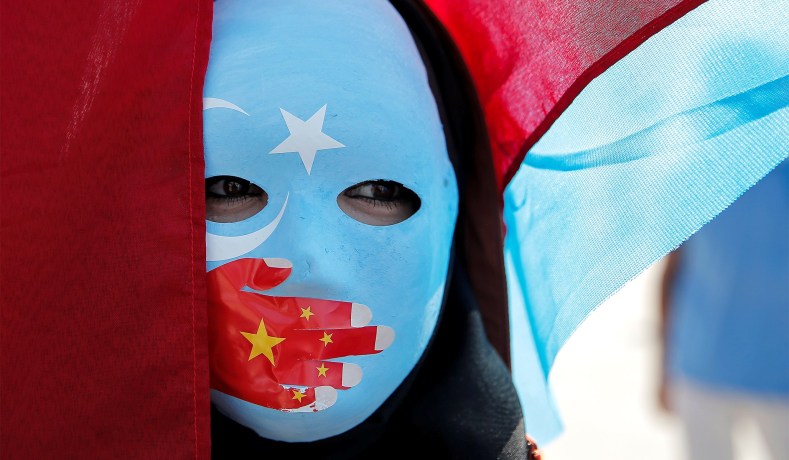
China’s policy of interning more than one million Uyghurs in Xinjiang is both inhumane and unlikely to yield the results that Xi Jinping and the CCP claim they want.

Interview with Jestina Mukoko and Ilaria Allegrozzi: Human Rights in Zimbabwe and Cameroon
01.28.21
During a recent interview, Jestina Mukoko and Ilaria Allegrozzi answered questions from APJ’s Brice Ngameni (Lead Interview Editor), regarding human rights conditions in Zimbabwe and Cameroon respectively. Jestina Mukoko is a prominent human rights activist in Zimbabwe who currently serves as director of the Zimbabwe Peace Project. In 2008, she was unlawfully abducted and detained […]