
The views expressed here are the author’s personal opinion and do not reflect the policy or position of any government or government organization.
This year marks the 80th year of the division of the Korean Peninsula. Since the early 1990s, when North Korea’s nuclear crisis began to escalate, the nuclear issue has become deeply intertwined with the question of reunification.
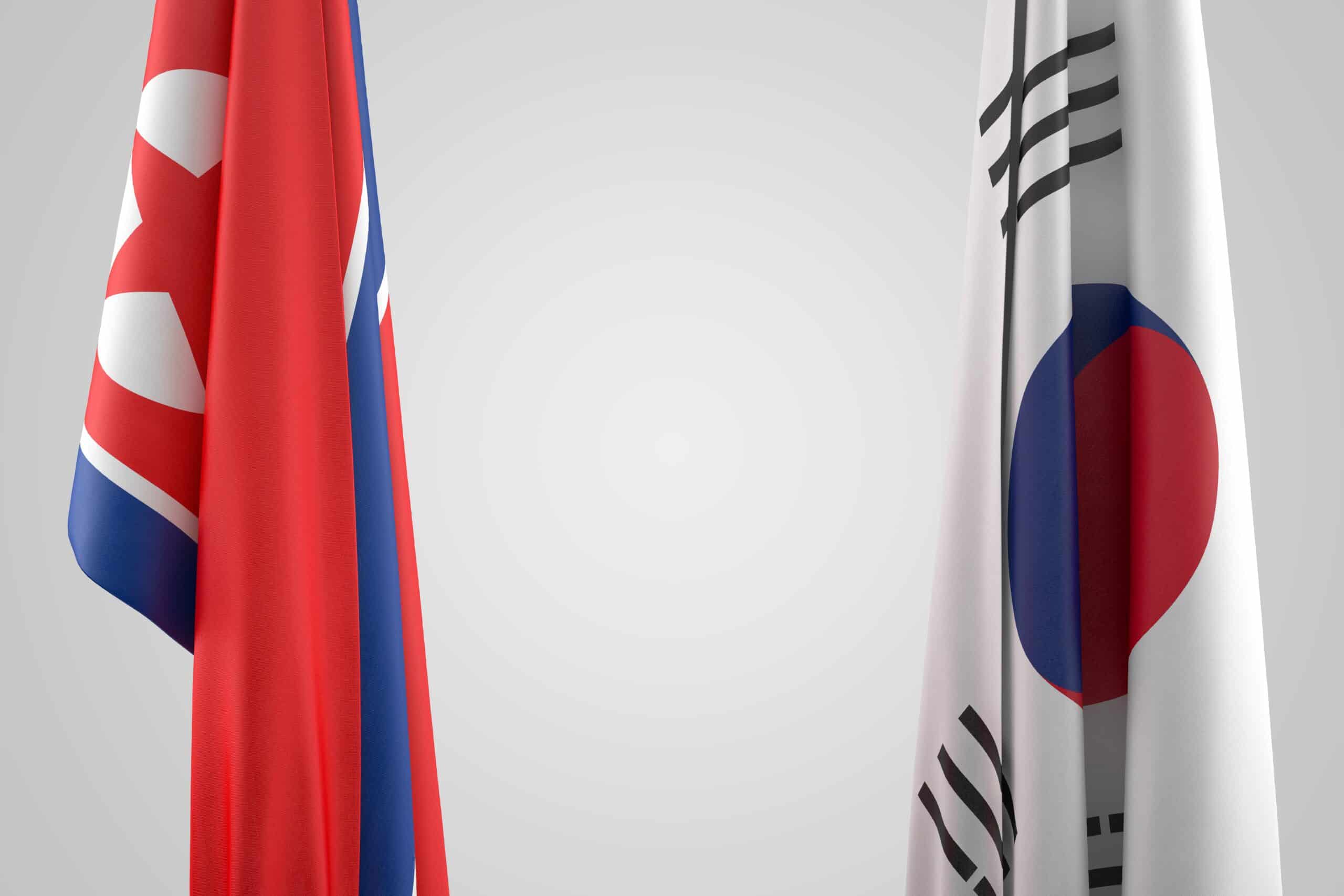
Both Koreas have shared the goal of reunification despite decades of ups and downs in inter-Korean relations. However, this long-held goal is now in grave peril. In December 2023, President Kim Jong Un renounced the goal of reunification and proposed a “two-state solution”—a phrase that brings Israel and Palestine to mind, but with a twist: a “hostile” two-state policy. North Korea is no longer pursuing reconciliation or reunification with the South.[i]
By abandoning reunification, Pyongyang is freed from the few remaining political restraints on its nuclear ambitions. As a sovereign and nuclear state, it pursues even deeper alignment with Beijing and Moscow, while keeping a window open for negotiation with Washington. This doctrinal change, especially in today’s new Cold War climate, poses serious risks to regional and global security.
The Perils of a Two-State Policy
Until recently, North Korea viewed South Korea as an enemy, but still part of the same nation temporarily divided. South Korea held similar views. When the two Koreas joined the United Nations simultaneously in 1991, both emphasized that the inter-Korean relationship is not a relationship between states but a special interim relationship stemming from the process toward reunification.[ii]
However, under its new policy, North Korea no longer regards South Korea as “nationally homogeneous”[iii] or part of “one nation.” North Korea now sees South Korea purely as an enemy, effectively blocking the possibility of cooperation or dialogue with the South. North Korea already demolished the Inter-Korean Liaison Office in 2020, and all other official communication channels have been unilaterally shut down by North Korea since 2023. Following the doctrine change, Pyongyang took further steps. It officially abolished counterpart agencies such as the Committee for the Peaceful Reunification of the Fatherland[iv] and the civilian inter-Korean organization, the National Reconciliation Council.[v] Without these communication channels, the risk of unintentional military escalation has significantly increased.
As long as reunification remained the official goal, even nominally, Pyongyang had to maintain at least a minimal engagement with Seoul and Washington. Now, freed from this pressure, Pyongyang can focus on strengthening alignment with Beijing and Moscow. In turn, Beijing and Moscow increasingly view North Korea as a useful partner to counterbalance US influence in the region. Meanwhile, South Korea has often maintained close communication with Beijing during periods of inter-Korean détente. However, as the two Koreas become aligned with opposing blocs, it will become increasingly difficult to build peaceful inter-Korean relations, and regional tensions are likely to rise as a result.
The unstable regional environment could once again give rise to calls for independent nuclear capability among the people of South Korea and Japan. This could also severely weaken the enforcement of the Nuclear Non-Proliferation Treaty (NPT). At the same time, the end of the reunification policy strengthens the groundwork for North Korea’s international recognition as a nuclear-armed state by asserting its “sovereignty and right of existence”[vi] in response to a perceived security imbalance. In a multipolar nuclear world, such dynamics could trigger a domino effect of nuclear proliferation.
Kim’s Strategic Calculus
Consistency has traditionally been a pillar of the regime’s legitimacy. Reunification was the goal included as part of North Korea’s original constitution in 1948. Therefore, abandoning a doctrine that is a legacy of his predecessors marks a notable shift, suggesting that Kim Jong Un has already concluded that discarding reunification is the most strategically advantageous approach for securing the regime’s survival. His hope is that it will shape a return to the negotiating table with the U.S.—without mentioning “denuclearization,” thereby securing de facto acceptance of his nuclear weapons program.
In light of this, the word “hostile” signals Kim’s willingness not only to escalate security threats but also to nullify inter-Korean peace accords and denuclearization agreements, all of which were premised on eventual reunification. Kim has done little to hide this. In a recent speech, he said, “If the U.S. drops its hollow obsession with denuclearization and wants to pursue peaceful coexistence with North Korea based on the recognition of reality, there is no reason for us not to sit down with the U.S.”[vii] At the same time that Kim wants recognition as a “responsible nuclear state” and equal footing with the U.S., a two-state solution also reflects his enduring effort to be recognized as a normal member of the international community rather than a rogue actor.[viii]
To achieve this, Pyongyang has deepened ties with Moscow and Beijing in ways that will serve Kim’s goals of gaining greater leverage in talks with the U.S. Since 2024, Kim has provided about 15,000 troops, along with ammunition to support Russia’s incursion into Ukraine.[ix] This September, he also stood alongside Presidents Xi and Putin on the Tiananmen rostrum, a symbolic moment representing the first gathering of the three leaders since the end of the Cold War.[x] According to witness reports in the Kyodo News, Kim used war anniversary events in Beijing in September to explain the “hostile two-state” doctrine to Presidents Xi and Putin and asked them for their support in abandoning peaceful reunification.[xi] Whether Xi or Putin agreed remains unclear. What seems clear, however, is that Kim is trying to leverage this trilateral relationship to strengthen his position in negotiations. In the West, there is no clear consensus on whether North Korea’s pursuit of arms control talks is a problem. Indeed, considering North Korea’s already advanced nuclear capability and the widespread pessimism about the prospect of North Korea’s denuclearization in the near future, some argue that a risk management approach is needed.[xii] In this way, arms control talks have gone from a nonstarter to a potential, even plausible option.
What is concerning, however, is that arms control implicitly recognizes North Korea as a nuclear state, thereby discarding or undermining the goal of denuclearization, which is precisely what Pyongyang seeks. Some may argue that it is on the path of denuclearization. However, this seems unlikely. To date, no case has led from nuclear arms control to denuclearization. The few instances where nuclear-armed states became non-nuclear, such as South Africa, did so by other means.[xiii] In light of this, arms control talks merely postpone the problem, legitimizing North Korea’s nuclear status and increasing long-term security risks. The core question underlying this discourse is whether the international community will recognize North Korea as a nuclear-weapon state or not.
Nevertheless, this doctrinal change has not been taken seriously as much as it deserves, both in terms of the goal of reunification and the goal of denuclearization. More attention and action are needed.
Toward Denuclearization, Peace, and Unification
First, the South Korean government should maintain its goal of peaceful reunification and denuclearization of the Korean Peninsula and only discuss reductions within a denuclearization process. In addition, South Korea must persuade the international community to support these central objectives by persuading the U.S. and China that recognizing North Korea as a distinct, nuclear-armed state will add uncertainty to global security.
Second, it is also important that the U.S. government not hastily agree to arms control talks with North Korea. So far, Washington’s official stance in support of denuclearization has not changed.[xiv] However, President Trump continues to refer to North Korea as a nuclear power,[xv] and last month mentioned he would “love to meet” Kim while visiting South Korea for the APEC meeting, expressing his willingness to discuss sanctions.[xvi] This time, Kim did not respond to President Trump’s love call, but it seems that a dialogue could be initiated at any time if Kim decides to respond. Rather than hastily initiating an arms control dialogue, the U.S. and South Korea must coordinate a strategy to address North Korea’s consistent demand to drop the goal of denuclearization.
Unfortunately, this clarity and urgency are currently lacking on multiple fronts, while North Korea’s new unification doctrine, in fact, poses a serious security crisis. Without careful attention to this issue, the Korean Peninsula could swiftly become the site of nuclear confrontation. To reduce security risks and build more sustainable peace on the peninsula, the international community must choose the path of denuclearization, peace, and unification over the path of arms control and two hostile states.
[i] Kim Soo-yeon, “(News Focus) N.K. Leader Says 2 Koreas Are ‘Hostile Nations at War’ with No Chance of Unification,” Yonhap News Agency, December 31, 2023, https://en.yna.co.kr/view/AEN20231231002300315
[ii] Agreement on Reconciliation, Non-aggression and Exchanges and Cooperation Between the South and the North, February 19, 1992, https://peacemaker.un.org/sites/default/files/document/files/2024/05/kr20kp911213agreement20on20reconciliation20non20aggression20and20exchangespdf.pdf
[iii] Kwak Gil-sup, “An in-depth look at Kim Jong Un’s “two states” narrative: Part 2,” DailyNK, January 24, 2024, https://www.dailynk.com/english/an-in-depth-look-kim-jong-un-two-states-narrative-part-2/
[iv] Agence France-Presse, “North Korea Closes Agencies Working for Reunification With South,” January 15, 2024, https://www.voanews.com/a/north-korea-closes-agencies-working-for-reunification-with-south-/7441282.html
[v] Choi So Mang, “北 ‘민간’ 대남기구 정리 선언에…남측 ‘카운터파트’ 분위기도 뒤숭숭 [After the North’s announcement to dismantle its ‘civilian’ organizations for inter-Korean affairs, unease spreads among South Korean counterparts], ” 뉴스원[News1], January 15, 2024, https://www.news1.kr/nk/politics-diplomacy/5290237
[vi] “North Korea tells UN: We will never give up nuclear program,” Reuters, September 29, 2025, https://www.reuters.com/world/asia-pacific/north-korea-tells-un-we-will-never-give-up-nuclear-program-2025-09-29/
[vii] Korea JoongAng Daily, “North’s Kim closes door on unification with South but open to talks with Trump,” September 22, 2025, https://koreajoongangdaily.joins.com/news/2025-09-22/national/northKorea/Norths-Kim-closes-door-on-unification-with-South-but-open-to-talks-with-Trump/2404570
[viii] Thomas Maresca, “North Korea tells United Nations it is” a ‘responsible nuclear state’”, UPI, January 22, 2025, https://www.upi.com/Top_News/World-News/2025/01/22/North-Korea-responsible-nuclear-state-United-Nations-Kim-Jong-Un/9681737536408/
[ix] Kim Arin, “North Korea likely to send more troops to Russia in July, August: NIS,” The Korea Herald, June 26, 2025, https://www.koreaherald.com/article/10518729
[x] Kim Dong-ha, Lee Beul-chan, Park Kook-hee, “Xi, Putin, Kim gather at Beijing parade amid new Cold War fears,” The Chosun Daily, September 4, 2025, https://www.chosun.com/english/national-en/2025/09/04/ALJT5FFCLRFPVPIU33TBHYXL4M/
[xi] “Kim in Midst of Diplomatic Offensive toward S. Korea,” Kyodo News, September 13, 2025, https://english.kyodonews.net/articles/-/60994?words=Kim+Jong+Un
[xii] Christy Lee, “US-North Korea Arms Control Talks or Denuclearization? Analysts Are Divided,” Voice of America, February 6, 2024, https://www.voanews.com/a/us-north-korea-arms-control-talks-or-denuclearization-analysts-are-divided/7477255.html
[xiii] Council on Foreign Relations (CFR), “South Africa: Why Countries Acquire and Abandon Nuclear Bombs,” July 27, 2023, https://education.cfr.org/learn/reading/south-africa-why-countries-acquire-and-abandon-nuclear-bombs
[xiv] Song Sang-ho, “Trump will pursue complete denuclearization of N.Korea: NSC spokesperson,” Yonhap News Agency, January 29, 2025, https://en.yna.co.kr/view/AEN20250129000451315
[xv] Park Boram, “Trump describes N. Korea as ‘sort of nuclear power’: AFP,” October 25, 2025, https://en.yna.co.kr/view/AEN20251025002000315
[xvi] “Trump would ‘love’ to meet Kim Jong Un again, but no word from North Korea,” Reuters, October 28, 2025, https://www.reuters.com/business/aerospace-defense/trump-would-love-meet-kim-jong-un-again-no-word-north-korea-2025-10-28/