
The Next Phase of the U.S.-China Cold War Is About Power, Not Ideology
It is no secret that Donald Trump appreciates a strongman leader. Trump has repeatedly praised China’s President Xi Jinping – calling him “one of the smartest people in the world” and “a man who knows exactly what has to be done.”[i] Nine months into his second term, Trump appears to be taking pages directly from China’s authoritarian playbook, reshaping the foundation of the two countries’ rivalry.
Trump’s second administration bears unmistakable parallels to China – so much so that some in China have described his actions as the United States’ “Cultural Revolution.”[ii] Xi has centralized the Communist Party’s power over the state, cracked down on the private sector,[iii] and removed presidential term limits;[iv] Trump has overhauled and downsized the federal government, taken government stakes in private enterprises, and flirted with a constitutionally-barred third term in office.[v] Xi has tightened controls over China’s cyberspace, media, and civil servants; Trump has publicly attacked dissenters, filed lawsuits against media outlets, and fired critics of his policies. Xi has eroded freedoms in Hong Kong and Xinjiang, increased coercive tactics against Taiwan, and stepped-up militarization of the South China Sea; Trump has threatened to annex Canada and Greenland, demanded unprecedented trade concessions, and ordered strikes on Venezuelan boats in international waters.
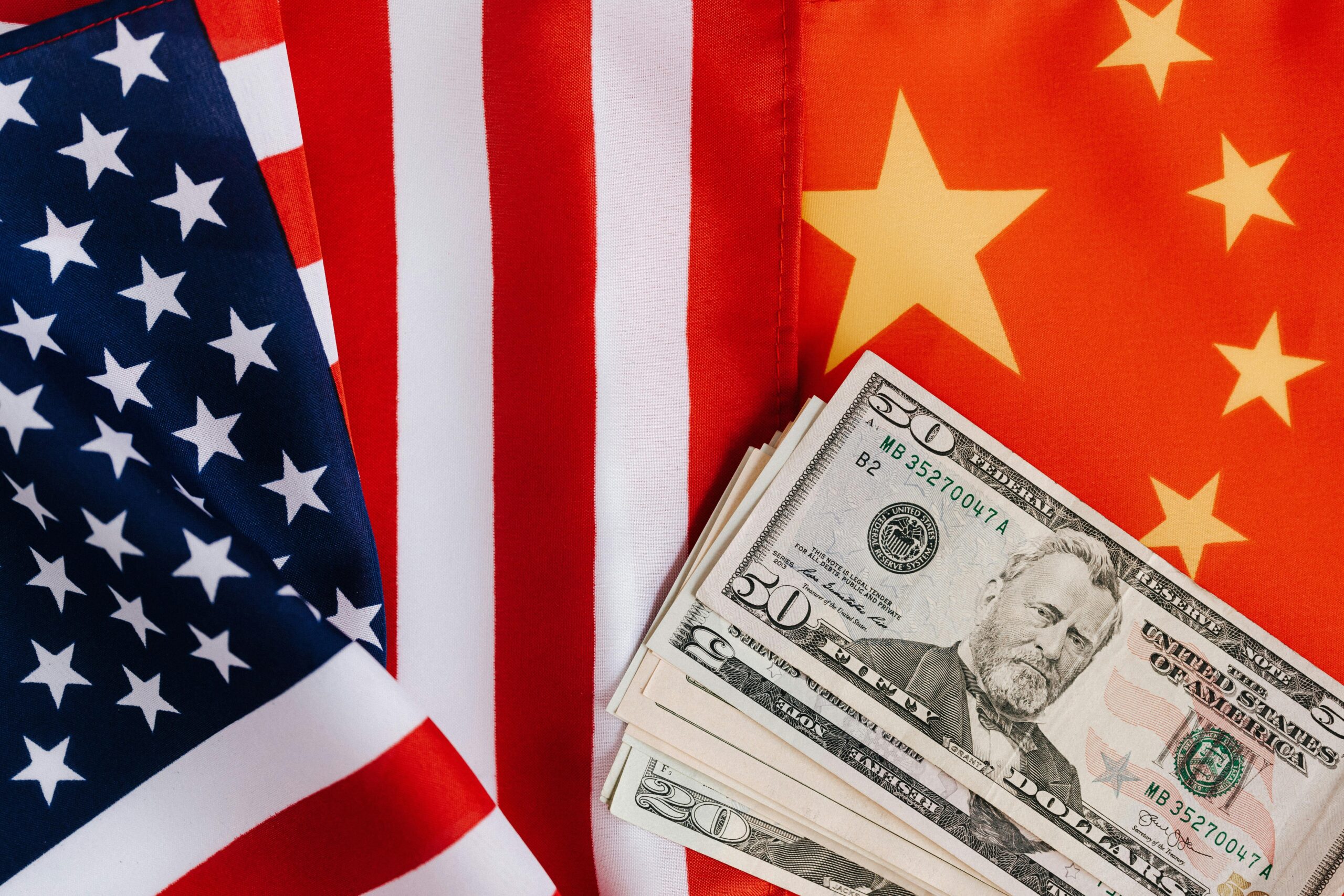
This convergence between Trump and Xi no doubt bodes poorly for democratic freedoms in both countries. At a higher level, it is reshaping their Cold War away from the Biden administration’s framing of the competition as one between liberal democracies and authoritarian states. Biden cast the contest as one that would prove “whether democracies could compete, including through a democratic alternative to China’s Belt and Road Initiative and calling out human rights abuses in China.[vi] As Washington increasingly divorces itself from the international, rules-based system it once helped create and lead, and casts aside alliances with like-minded nations for rent-seeking and resource-extraction (through tariffs, deals for joint development of natural resources, and foreign investment commitments), the new old framework is realism. The competition between Beijing and Washington is now dominated by hard power – economic, technological, and military – and by the personal power of the countries’ leaders. The end goals: self-reliance in manufacturing, “winning” the AI race, building the strongest military capabilities, and paving Xi’s and Trump’s historical legacies.
While in his first term, Trump shook up business-as-usual as a political outsider, he still preserved the foundational frameworks of U.S. grand strategy. His Deputy National Security Advisor Matt Pottinger notably delivered a speech[vii] in Mandarin on the anniversary of the May Fourth Movement, where he wondered whether the movement’s democratic aspirations in China would “remain unfulfilled for another century.” During that period, Trump also signed the Hong Kong Human Rights and Democracy Act and the Uyghur Human Rights Policy Act into law. Now – in his second term – he has fully embraced his role as a businessman. Without the burden of proving the competitiveness of the democratic system, he has slapped tariffs on allies and adversaries alike, brokered a 15% revenue-sharing deal[viii] with Nvidia’s and AMD’s sales of AI chips to China, and even taken on the role of a venture capitalist with a 10% government stake[ix] in Intel. Efforts to push for democracy and human rights – which has a less immediate value-add for the U.S. as a business – have been abandoned.[x]
For the U.S.’ traditional allies, this shift is a hard pill to swallow. While the U.S. was once a reliable advocate for democracies, Trump’s second term signaled a clear pivot early on with a public spurning of Ukrainian President Volodymyr Zelenskyy over Russia’s invasion of Ukraine[xi]. Trump has seemed disinterested in preventing adversaries from dominating regions of the world, with its dramatic withdrawal of international aid and a flippancy toward having “lost India and Russia to deepest, darkest, China.”[xii] (“May they have a long and prosperous future together!” Trump posted on Truth Social.) Now, the Trump administration is going to war with its own democratic institutions – questioning the integrity of elections, threatening deportations of people over speech, and targeting everyone from the Federal Reserve governor[xiii] to judges[xiv] and journalists.[xv] He has also ordered a succession of U.S. strikes against boats off the coast of Venezuela in a broadened war on drugs, despite what legal experts have described as extrajudicial killings that reveal cracks in the checks on Trump’s presidency.[xvi]
To be sure, the U.S. remains a functioning democracy, with a strong alliance network of like-minded democracies. Trump’s second term has only lasted less than a year; the nation’s course could change. Its current trajectory, however, suggests sidelining the pursuit of democratic freedoms and civil liberties globally as a U.S. priority. And even with Trump’s growing parallels to China’s Xi, their visions differ: Trump is focused internally on remaking the U.S. into a manufacturing powerhouse and building wealth within the country’s tightened borders; Xi wants to secure China’s superpower status and to create a new vision for global governance.
For Beijing, these changes may simplify its relationship with the U.S. One longstanding thorn in the bilateral relationship was U.S. ambitions for China to abandon its one-party system in favor of a more Western-style political model. At the turn of the century, China’s membership to the World Trade Organization was once hotly debated over concerns about the country’s human rights conditions. When the Clinton administration went to bat for China’s WTO membership, the argument was that Beijing’s market-friendly reforms would allow for a more open economy, which could ultimately pave the way for political liberalization.[xvii] Even while the nature of engagement shifted towards caution under President Barack Obama, officials from his administration admitted that U.S. policies “failed to change China in the ways we intended or hoped” towards either political or economic openness.[xviii]
In the first Cold War, although the nuclear arms build-up was the primary avenue of power competition, the broader framework fell under the struggle between American capitalist values and the Soviet Union’s socialist model. Now, the U.S. and China can compete entirely based on realist interests like trade and technology, without the intractable challenge of resolving ideological differences. Previous tension points have disappeared. U.S.-funded outlets like Radio Free Asia that sought to counter Chinese Communist Party narratives? The Trump administration defunded it.[xix] U.S. efforts to combat China’s Belt and Road through development projects from USAID? The Trump administration shut it down.[xx] Shows of support for Taiwan by allowing its president to transit to the U.S.? The Trump administration vetoed it.[xxi] The real competition is now concentrated on the race on advanced semiconductors and artificial intelligence, military capacity and capability, and economic strength and domestic self-sufficiency.
However, if the U.S. wants to maintain its status as a superpower, it will need to reassess its priorities and long-term grand strategy. Doing so will likely find that its core competitive advantage against countries like China is in its embrace and projection of free and open values, and that strengthening democracies at home and abroad should be a core U.S. national security interest.
The U.S. once believed that it could liberalize China – by encouraging market reforms, increasing exchanges and engagement, and proving the success of its liberal democracy. The opposite may have happened. China’s illiberal strategies and tactics may now be a model for Trump to silence critics, centralize his power, and pave his personal legacy. The ideological rivalry is no more – the competition is now about power.
[i] Jenna Moon, “Trump says he is open to talks after hiking China tariffs to 125%,” BBC News. April 7, 2025, https://www.bbc.com/news/live/cp8vyy35g3mt.
[ii] Renaud Lambert, “China Asks, is this the US’s Cultural Revolution?” Le Monde Diplomatique, May 7, 2025, https://mondediplo.com/2025/05/07china.
[iii] “Winners and Losers in China’s Sweeping Private-Sector Crackdown,” Bloomberg News, August 26, 2021, https://www.bloomberg.com/news/articles/2021-08-26/winners-and-losers-in-china-s-sweeping-private-sector-crackdown.
[iv] “China’s Xi allowed to remain ‘president for life’ as term limits removed,” BBC News, March 11, 2018, https://www.bbc.com/news/world-asia-china-43361276.
[v] Riane Lumer, “Trump Third Term: President Says It’s ‘Pretty Clear’ He’s Not Allowed to Run,” CNN Politics, October 29, 2025, https://www.cnn.com/2025/10/29/politics/trump-says-clear-no-third-term-intl-hnk.
[vi] Jonathan Ponciano, “Biden: G-7 Countries In A ‘Contest’ To See Whether Democracies Can Compete With Autocracies Like China,” Forbes, June 13, 2021, https://www.forbes.com/sites/jonathanponciano/2021/06/13/biden-g-7-countries-in-a-contest-to-see-whether-democracies-can-compete-with-autocrats-like-china/.
[vii] “Remarks by Deputy National Security Advisor Matt Pottinger to the Miller Center at the University of Virginia,” U.S. Embassy in Georgia, May 4, 2020, https://ge.usembassy.gov/remarks-by-deputy-national-security-advisor-matt-pottinger-to-the-miller-center-at-the-university-of-virginia-may-4/.
[x] “Nvidia and AMD to Pay 15% of China Chip Sale Revenue to US,” The Associated Press, August 11, 2025, https://apnews.com/article/nvidia-amd-15-revenue-share-deal-c06e20d9c3418f1d0b1292891c4610c6.
[xi] James M. Lindsay, “Trump and Zelenskyy Clash in the Oval Office,” Council on Foreign Relations, February 28, 2025. https://www.cfr.org/blog/trump-and-zelenskyy-clash-oval-office.
[xii] “Trump says India and Russia appear ‘lost’ to ‘deepest, darkest China,’” Reuters, September 6, 2025. https://www.reuters.com/world/china/trump-says-india-russia-appear-lost-deepest-darkest-china-2025-09-05/.
[xiii] Dan Mangan, “Former Fed, Treasury chiefs urge Supreme Court to block Trump firing Lisa Cook,” CNBC, September 25, 2025, https://www.cnbc.com/2025/09/25/fed-trump-lisa-cook-supreme-court.html.
[xiv] Sareen Habeshian, “Trump administration escalates attacks on judges,” Axios, May 29, 2025, https://www.axios.com/2025/05/29/trump-administration-courts-judges.
[xv] Corky Siemaszko, “Trump’s Anti-Media Rhetoric Turns to Action,” NBC News, February 13, 2025, https://www.nbcnews.com/politics/donald-trump/trumps-anti-media-rhetoric-turns-action-rcna191949.
[xvi] Charlie Power, “The Peril of a White House That Flaunts Its Indifference to the Law,” The New York Times, October 24, 2025, https://www.nytimes.com/2025/10/24/us/politics/white-house-boats-law.html.
[xvii] “The Broken Promises of China’s WTO Accession: Reprioritizing Human Rights,” Congressional-Executive Commission on China, March 1, 2017. http://www.cecc.gov/events/hearings/the-broken-promises-of-chinas-wto-accession-reprioritizing-human-rights.
[xviii] Kurt M. Campbell and Ely Ratner, “The China Reckoning: How Beijing Defied American Expectations,” Foreign Affairs, February 13, 2018, https://www.foreignaffairs.com/china/china-reckoning.
[xix] Emily Feng, “Radio Free Asia Announces Mass Layoffs amid Funding Fight with Trump Administration.” NPR, May 2, 2025, https://www.npr.org/2025/05/02/nx-s1-5385314/radio-free-asia-announces-mass-layoffs-amid-funding-fight-with-trump-administration.
[xx] “Trump Says India and Russia Appear ‘lost’ to ‘Deepest, Darkest China,’” Reuters, September 6, 2025. https://www.reuters.com/world/china/trump-says-india-russia-appear-lost-deepest-darkest-china-2025-09-05/.
[xxi] Didi Tang and Matthew Lee, “Taiwan’s President Scraps Stop on American Soil,” The Associated Press, July 29, 2025, https://apnews.com/article/taiwan-china-trump-lai-f8bae1421f9d55e240a50671e14ec23f.