
Latest Article

Why Marshall, Not Monroe, Best Serves U.S. Interests in Latin America
Power built through partnership, not dominance, is what will secure long-term leadership in the region.Explore all Articles
filter by–Region
filter by–Country
search by–Keyword

Another Way To Fight: Unconventional Warfare from Rome to Iran
05.2.13
BY DAVE COUGHRAN On 20 October 2011, Mahmoud Jibril, the interim Prime Minister of the Libyan National Transitional Council, publicly announced the death of former Libyan dictator Muammar el-Qaddafi. Qaddafi’s overthrow was the culmination of months of intense effort from Libyan revolutionary militias, the United States, and the North Atlantic Treaty Organization (NATO). The victory […]
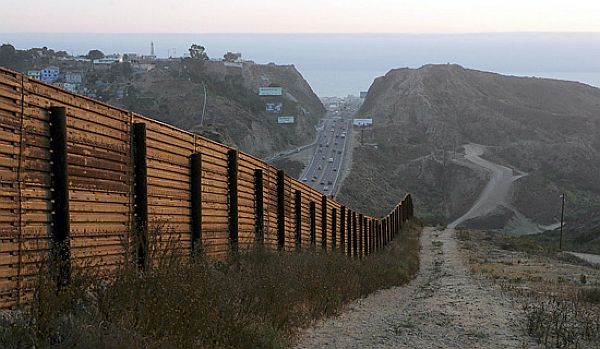
Immutable and Permeable: Contradictions of the U.S.-Mexican Border
05.2.13
BY ANYA MALKOV In May 2012, eleven students of the John F. Kennedy School of Government at Harvard University visited El Paso, Texas, and Ciudad Juárez, Mexico, as part of a Leadership Service Seminar program sponsored by the Center for Public Leadership at the Harvard Kennedy School and the offices of the Academic Dean and […]
The Birth of Politics and the Public Sphere in the Arab World
04.21.13
Rami George Khouri is a Palestinian-Jordanian and U.S. citizen whose family resides in Beirut, Amman, and Nazareth. He is director of the Issam Fares Institute for Public Policy and International Affairs at the American University of Beirut. His journalistic work includes writing books and an internationally syndicated column, and he also serves as editor-at-large of the Beirut-based Daily […]

The Crux of the Gulf Energy Challenge Development and Industrialization in the Arabian Gulf Region
04.20.13
Abstract: The Arabian Gulf region has the most prodigious energy reserves in the world. However, the region’s massive industrialization and expanding demography are also increasing energy consumption at unsustainable rates, leading to natural gas deficits across the region. This article argues that the pressures of economic development and industrial diversification are steadily eroding the comparative […]
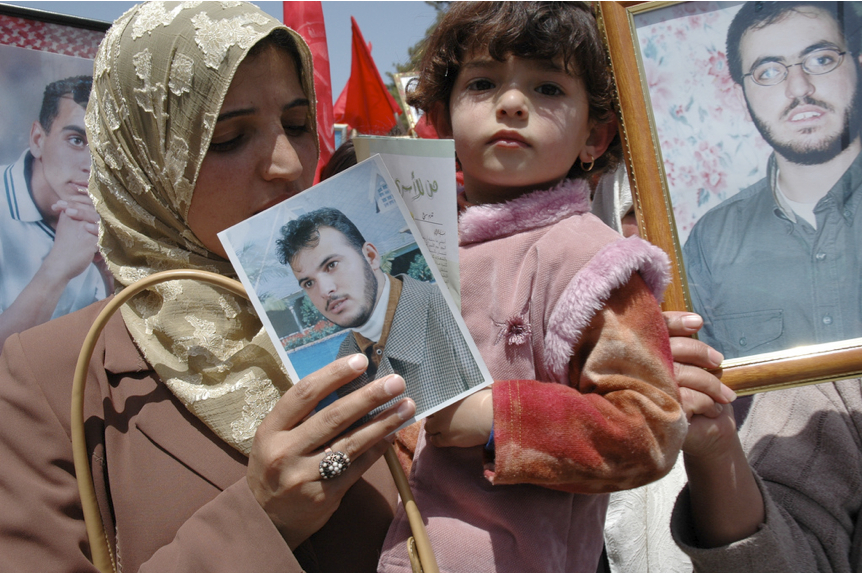
What Lies Behind Our Lies? Self-Deception and the Israeli-Palestinian Conflict
04.17.13
Though people tend to see themselves as objective interpreters of the world, they are often active self-deceivers. Self-deception is a psychological process whereby one selectively chooses knowledge that confirms a positive self bias. Affecting people on an individual and group level, self-deception can have destructive consequences. It is thus important to understand self-deception’s role in […]
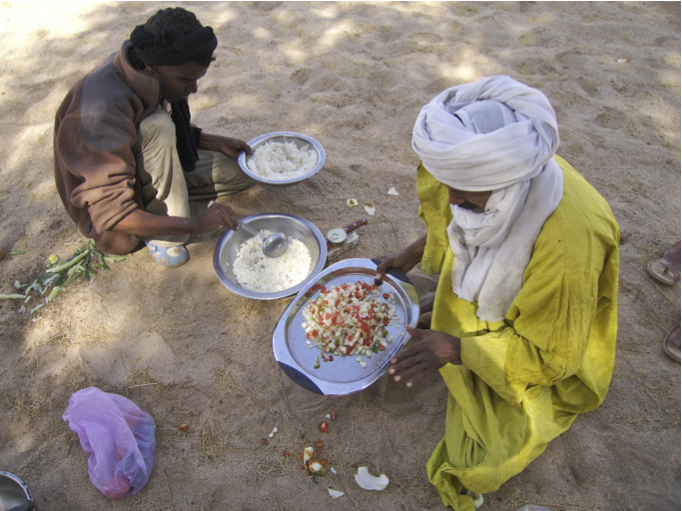
Oil, Ideology, and Regime Adaptation in the Rentier Republics: A Comparison of Libya and Algeria
04.17.13
Abstract: The Arab Spring provides a rare opportunity to examine the roles of natural resources and state structure in the face of popular discontent. While the Gulf monarchies have all weathered the events of 2011, the diverging fates of the two oil-producing republics in North Africa—Algeria and Libya—suggest that neither factor alone can account for […]
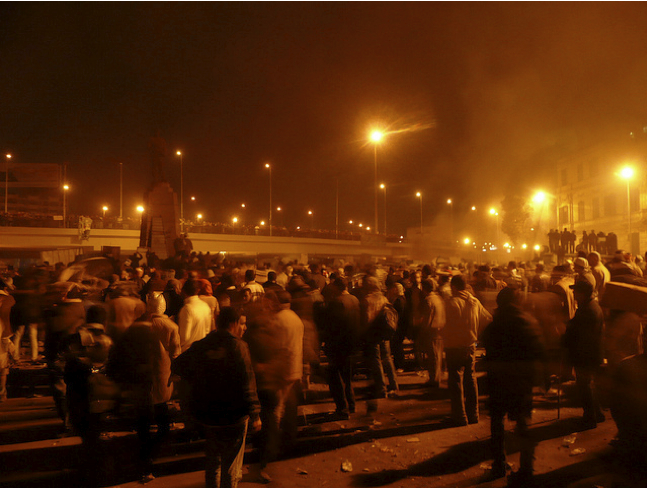
A Conversation with Esraa Abdelfattah and Bassel Adel
04.15.13
Esraa Abdelfattah, already a leading activist prior to 2011, played a major role in the January 2011 Egyptian revolution. She has been a political activist since 2008, when she created the April 6 Strike Group on Facebook, which grew to 70,000 members and resulted in her arrest. She is currently vice-chairman of the Egyptian Democratic […]
The Arab Awakening “Cascade” of Failing States: Dealing with Post-Revolutionary Stabilization Challenges
04.12.13
Yoel Guzansky, the former Iran coordinator at Israel’s NationalSecurity Council, is a research fellow at the Institute for NationalSecurity Studies at Tel Aviv University and a doctoral candidate ininternational relations at Haifa University. Benedetta Berti is a fellow at the Institute for National Security Studies, a lecturer at Tel Aviv University, a member […]
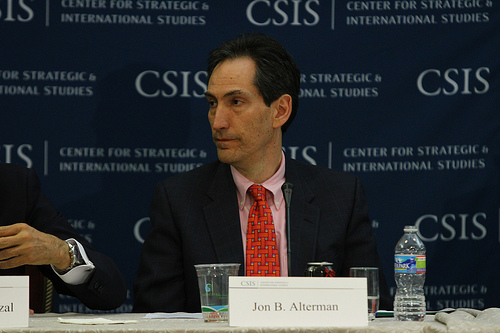
Surveying the MENA Region: An Interview with Jon B. Alterman
04.11.13
Jon B. Alterman is director of the Middle East Program at the Center for Strategic and International Studies (CSIS). Prior to joining CSIS in 2002, he served as a member of the policy planning staff at the U.S. Department of State and as a special assistant to the assistant secretary of state for Near […]
Symptoms of an Enduring Crisis: Prospects for Addressing Mali’s Conflict Catalysts
04.2.13
Abstract Despite the peace agreements and disarmament processes implemented since the 1990s, conflict in Mali has proven to be resilient. Conflict symptoms pertaining to deficient governance and sustained societal discontent have recurrently generated armed violence. This paper will explore the multifarious factors that have continually undermined the political stability and integrity of the Malian state. […]
Desertec: A Fata Morgana?
03.4.13
In 2009, a group of academics, policy makers, and industry professionals came together and created the Desertec Industrial Initiative (DII) and the DESERTEC Foundation with the goal of meeting 15% of Europe’s electricity needs and two thirds of the Middle East and North Africa’s electricity needs with renewable power generated in the deserts of northern […]
At What Cost? Aid-Security Relations in East and West Africa
03.4.13
Meet America’s new ally in Africa. With 16 million people, a per capita income of $360 (PPP),52,875 refugees, and dysfunctional neighbors, Niger seems less than the ideal partner in the growing U.S. strategic footprint in Africa, but its geographic location places it at the frontlines.Landlocked between the hotbed of Mali and the oil basin in […]