
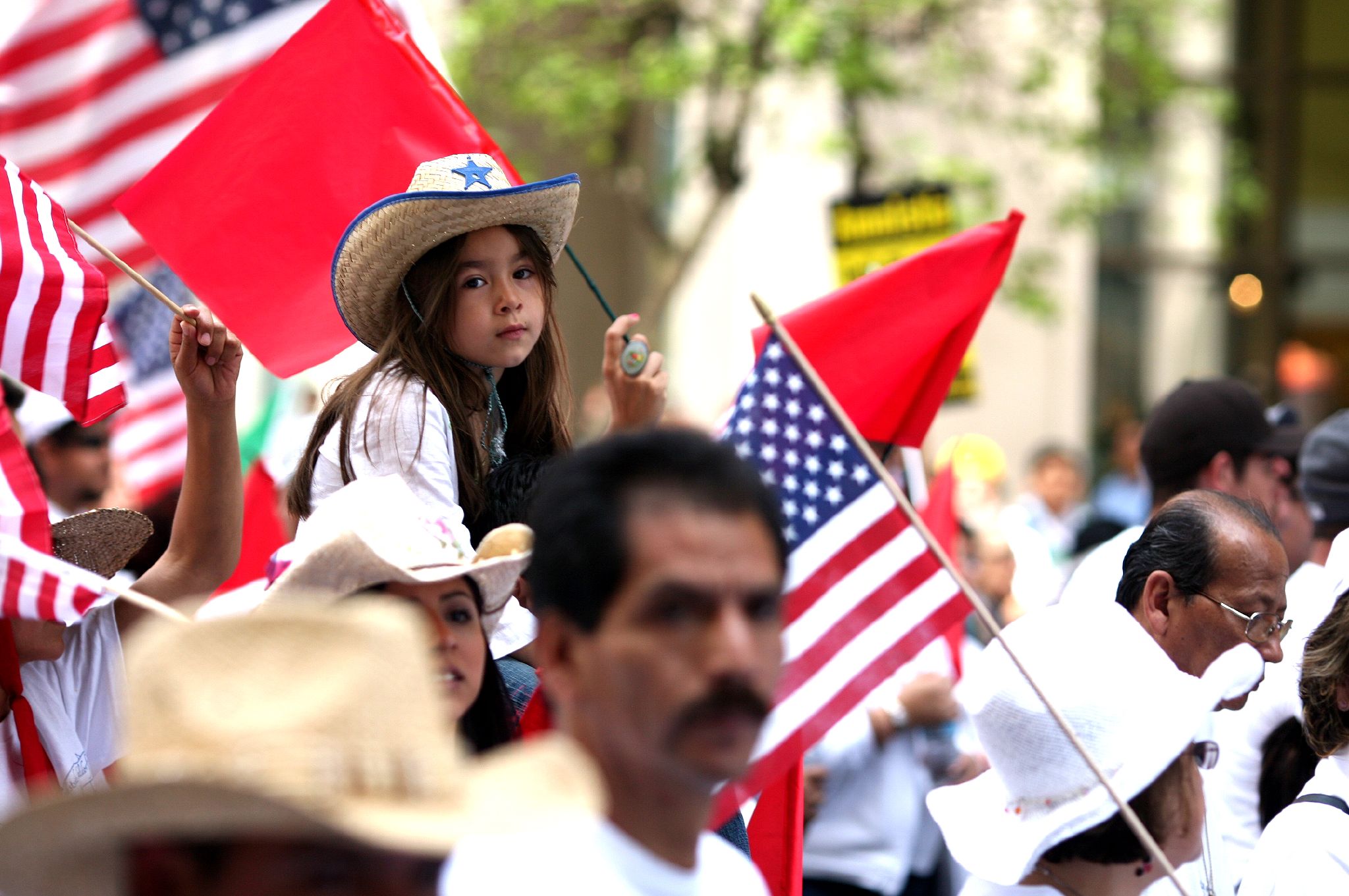
Our emergence as a political force across the land is not merely a product of our growing numbers and reach as a community. It is also a result of the significant gains we have made in recent decades in creating essential mediating institutions that have leveraged our talents and perspectives in fields ranging from law and the media to education and philanthropy.
Latino organizations in these and other fields have provided a platform for our community to develop effective leaders, to build community assets, and to gain voice in state and national political discourse. These organizations—ranging from anchor civil rights networks like the National Council of La Raza to business and professional groups like Hispanics in Philanthropy, the New America Alliance, and the National Association of Latino Elected and Appointed Officials—have increasingly helped to mainstream our political identity and interests just as Jewish American, African American, Asian American, women’s, and LGBT anchor institutions have helped give those important and historically excluded groups an accepted place in policy making and in other centers of national life.
At each step of our journey to gain national political standing and a modicum of power, we have also made strides to access positions historically off-limits to us. We have effectively fought for a place at the table in corporate America. We have made important contributions to the American military. We have increasingly succeeded in the worlds of sports and entertainment. We have developed strategically significant intellectual leadership through our achievements in organized philanthropy, journalism, and higher education.
In this final connection, the Harvard Journal of Hispanic Policy has played an important role. The Journal has provided us with a platform for community leadership exchange and self-expression at the institution of higher learning that many people across our nation and abroad consider to be America’s premier center of academic and intellectual pursuit. It has enabled Latino faculty, staff, and students within the prestigious Harvard community to find and work with one another in ways that have been unprecedented and increasingly advantageous both to our community’s and Harvard’s quest to better represent new and emerging groups that will shape the nation’s and the world’s future. Finally, and perhaps most importantly, the Journal has created an increasingly important space for the development of the ideas and perspectives of both established and emerging thought leaders concerned about the future of Hispanic America and its role in advancing the American Dream.
The culmination of these developments, coupled with our robust population growth of recent years, has helped to redefine what it means to be an American at the outset of the 21st century. All of this progress did not happen as part of a well orchestrated plan of action by our community leaders, nor as an accomplishment pre-ordained by history. Rather, our entrance into popular culture and high-level politics has resulted from important sacrifices by uncounted individuals and groups of Hispanic heritage acting on independent but ultimately reinforcing tracks all across the land over many years. The happy coincidence of all these efforts coming together now means that Latinos and Latinas of the future will have the opportunity to participate in American civic culture in ways we never have before, which is to say in ways that are finally strategic, connected, and impactful.
Had we not developed institutional presence and capacity such as that reflected in the evolution of our anchor law and social justice organizations, our business associations, our journalistic and media networks, and our philanthropic and educational partnerships, we would not, indeed could not, have come so far so fast.
The Harvard Journal of Hispanic Policy, now more than twenty-five years in circulation, is a particularly important barometer of our progress as Americans in the context of community institution building and empowerment. In its early iterations, the Journal was a bellwether of things to come, of talent still to be tapped and developed, of a community still searching for relevance and place. Today however, the Journal is poised to serve a higher purpose. It is instead situated to provide an essential pathway to leadership development, public policy engagement, and intellectual progress that is beneficial not only to Hispanic Americans, but also to Americans of all backgrounds who care about our nation’s future.
Our great opportunity now as a community of common interest and destiny is to contribute to the next generation of American progress and justice and to show that, despite continuing anti-Latino sentiment in too many places, we Latinos are in fact net givers rather than takers. We are an essential source of American solutions rather than merely producers of complex and thorny problems.
This is precisely the position we envisioned when the Journal’s small founding staff convened to take up its development. Back then, few could truly appreciate our vision. Today, though, history and the unfolding future all around us reinforce what we surmised all those years ago. Namely, Latinos across the United States are destined to help lead our nation to the better future that awaits us all—a future that is more inclusive and fair, more dynamic, and more successful in achieving America’s democratic promise than ever before.